Wednesday, November 30, 2005

are you bad enough to be a christian?


Below is a thought-provoking excerpt from Dory at Wittenberg Gate

Many people suppose that Christians are people who think they are getting into heaven because they have been good enough. The truth is, people who think they are good enough to get into heaven, are not Christians at all. In fact, such people are not even ready to hear the good news about what Christ has done for His people. They first have to be convinced that they have been bad enough to need Jesus’ help in the first place.

What they don’t understand is that God does not grade on a curve. He doesn’t weigh good deeds against bad deeds or let us into heaven because we’ve been pretty good. God says that every sin against His holy law makes us deserving of an eternity in Hell. Every sin--not just the big ones, such as murder or adultery, but the little ones, too, such as cheating on a math test or stealing cigarettes from Mother’s purse. God demands that we be perfect.

This puts us all in the same tough spot, because, as the Bible tells us, “there is none righteous, no, not one.” From the sweetest ‘goody-two-shoes’ to the meanest criminal--from the most successful, upstanding businessman to the most miserable failure--we will all stand before God and be found unacceptable in His sight.

Unless, that is, Christ stands in our place. And that, you see, is the good news.

It is not God’s desire that everyone go to Hell forever. He wants to save from Hell a huge number of people--more than we can count and from every race and nationality of people on the earth. In this case, we can be particularly glad that God always gets what He wants!

But God must save us in a just way. After all, if a man was a judge in a courtroom and he knowlingly let a guilty man go free, we would rightly say he was an unjust judge. God sees to it that every sin gets the just punishment it deserves. He is perfectly just.

The Son of God, in the greatest act of love that ever was, took on human flesh and became the Man, Jesus Christ. So Jesus was fully God and fully human in one person. Then Jesus did something that no other human being has ever done. He lived a perfect life. That’s right, He never sinned--not even a little bit. He never rolled His eyes at His mother. He never had a lustful thought. He never stole a piece of bread.

Then Jesus presented Himself to God the Father as a perfect substitute for the people He would save. He agreed that He would take the punishment His people deserve, so God could justly declare that those sins were already paid for. It’s as if I borrowed a hundred dollars, but someone else paid off the loan. My debt is paid and can’t be brought up to me again, even though I didn’t pay it.

This is what Jesus was doing when He died on the cross. He took upon Himself all the guilt of His people and He paid the debt they owed. He allowed Himself to be punished for the sins of others. And because Jesus is also God--the Giver of Life--He was able to overcome death and rise again to life.

Did Jesus make Himself a sacrifice for people who earned it and deserved it? No! He died for people who had no way of gaining entrance to heaven on their own. The Bible calls this gift He gave an act of grace. Grace is the giving of a gift to someone who does not deserve it and has done nothing to earn it.

Now when His people die and stand before the throne of God and Satan accuses them of this sin or that, Jesus answers, “But I have paid for that sin. There is no condemnation left for this person.”

No condemnation! What a wonderful thought! In fact, it is a life-changing thought. But only if you believe it is true. If I told you that if you believe it, you could turn stones into gold, you couldn’t make yourself believe such a thing no matter how hard you tried. You might be able to pretend you believed it, but you wouldn’t really believe it.

Believing that Christ died for your sins and that you can stand before God with no condemnation is like that, too. Either people believe it or they don’t. It is God who enables people to believe this, and when He does, it changes their lives. We call this faith.

Faith is trusting Christ alone to save you from your sins. It is not trusting your own good behavior or the blessing of some church or another. It is not trusting in prayers or altar calls. Christ saves His people and we can add nothing to His work to make it better. Sometimes we have trouble believing this because we feel like there must be something we can do or something we must do. It is so amazing to think this grace is free!

God gives His people a most precious privilege--the privilege of prayer. Remember, if you have faith, you do not stand before God now as a condemned criminal. You stand before Him in the righteousness of Jesus Christ. God tells us that His people are adopted sons and daughters. You can speak to God as a child speaks to a loving father. When we pray to God, we can safely admit our sins to Him. We can ask for the things we need. We can ask for food and clothing and wisdom and a stronger faith. Unlike many earthly fathers, our heavenly Father will never forget us, nor forsake us, nor do us any wrong.

So, if you think you are bad enough to need Jesus Christ to save you from your sins, and if you believe His death on the cross is the only means by which you can be saved, then you can be assured that God has done what He promised!

May God bless you with a growing faith and confidence in Jesus Christ, our Lord.

Romans 10:13 “For ‘whoever calls on the name of the Lord shall be saved’.”

Matthew 9:12-13 “And when the Pharisees saw it, they said to His disciples, “Why does your teacher eat with tax collectors and sinners?” When Jesus heard that, He said to them, “Those who are well have no need of a physician, but those who are sick. But go and learn what this means, ‘I desire mercy and not sacrifice, For I did not come to call the righteous, but sinners to repentance.’”

Romans 5:6-9 “For when we were still without strength, in due time Christ died for the ungodly. For scarcely for a righteous man will one die; yet perhaps for a good man someone would even dare to die. But God demonstrates His own love toward us, in that while we were still sinners, Christ died for us. Much more then, having now been justified by His blood, we shall be saved from wrath through Him.”

Romans 8:1 “There is therefore no condemnation to those who are in Christ Jesus, who do not walk according to the flesh, but according to the Spirit.”

Tuesday, November 29, 2005

beza on law and gospel


That which we call The Word of God: Its two parts, the Law and the Gospel by Theodore Beza (1519-1605)

On this subject we call the "Word of God" (for we know well that the Eternal Son of God is also so named) the canonical books of the Old and New Testament; for they proceed from the mouth of God Himself.

We divide this Word into two principal parts or kinds: the one is called the "Law", the other the "Gospel". For, all the rest can be gathered under the one or the other of these two headings.

WHAT IS LAW?
What we call Law (when it is distinguished from Gospel and is taken for one of the two parts of the Word) is a doctrine whose seed is written by nature in our hearts. However, so that we may have a more exact knowledge, it was written by God on two Tables and is briefly comprehended in ten commandments. In these He sets out for us the obedience and perfect righteousness which we owe to His majesty and our neighbours. This on contrasting terms: either perpetual life, if we perfectly keep the Law without omitting a single point, or eternal death, if we do not completely fulfil the contents of each commandment (Deut. 30:15-20; James 2:10).

WHAT IS GOSPEL?
What we call the Gospel ("Good News") is a doctrine which is not at all in us by nature, but which is revealed from Heaven (Matt 16:17; John 1:13), and totally surpasses natural knowledge. By it God testifies to us that it is His purpose to save us freely by His only Son (Rom. 3:20-22), provided that, by faith, we embrace Him as our only wisdom, righteousness, sanctification and redemption (1 Cor 1:30). By it, I say, the Lord testifies to us all these things, and even does it in such a manner that at the same time he renews our persons in a powerful way so that we may embrace the benefits which are offered to us (1 Cor 2:4)

>continue reading

Monday, November 28, 2005

monergism vs. synergism


And you He made alive, who were dead in trespasses and sins - Ephesians 2:1

Does God do all the work in salvation (monergism), or is there a cooperation that takes place between God and myself (synergism)? I would argue for monergism. Here's a great excerpt from John Hendrix on this topic:

The great Puritan Divine Richard Sibbes once said, "God knoweth we have nothing of ourselves, therefore in the covenant of grace he requireth no more than he giveth, and giveth what he requireth, and accepteth what he giveth."

In other words, what God requires of us (faith, repentance, to love Him supremely) he grants to us in Christ (2 Timothy 2:25; Eph 2:5,8). This means that while there are many precious promises declared to us in the gospel (Rom 10:4), yet the Lord understands that the outward letter, even though vigorously preached, does not itself spiritually enable sinners to receive Jesus for righteousness and salvation. A command and a promise is established in the gospel that whoever receives Jesus will be accepted and justified. Yet none of us, due to our natural love for darkness, are inclined to receive the Christ of the gospel (John 3:19). Therefore, in His great mercy to those He loves, Jesus sends His Holy Spirit to quicken us (John 6:63; John 1:13, 3:6) to a living faith that apprehends Christ and His benefits. The dead in sin are granted new life (John 5:25) by the Spirit who works in us all that is required to be made partakers of his righteousness that we might be reconciled to God. As the Spirit illumines and regenerates the soul, Christ's perfect faith and obedience are reckoned to us by God's grace, and on account of Him are we accepted as righteous before Him. What we sinners were incapable of due to pride and evil inclinations, Christ purchased for us as the Spirit unites us to His life, death and resurrection. This was so the righteousness of the law might be met in us. This purchased grace which includes our regeneration, justification and sanctification is all that power and righteousness which Christ has procured for us and of which He makes us partakers.

> Read more from John Hendrix's article, The Work of the Trinity in Monergism

Wednesday, November 23, 2005

acquiring perseverance


Acquiring Perseverance

The Lord thy God will put out those nations before thee by little and little. (Deuteronomy 7:22)

We are not to expect to win victories for the Lord Jesus by a single blow. Evil principles and practices die hard. In some places it takes years of labor to drive out even one of the many vices which defile the inhabitants. We must carry on the war with all our might, even when favored with little manifest success.
Our business in this world is to conquer it for Jesus. We are not to make compromises but to exterminate evils. We are not to seek popularity but to wage unceasing war with iniquity. Infidelity, popery, drink, impurity, oppression, worldliness, error; these are all to be "put out."

The Lord our God can alone accomplish this. He works by His faithful servants, and blessed be His name. He promises that He will so work. "Jehovah thy God will put out those nations before thee." This He will do by degrees that we may learn perseverance, may increase in faith, may earnestly watch, and may avoid carnal security. Let us thank God for a little success and pray for more. Let us never sheathe the sword till the whole land is won for Jesus.

Courage, my heart! Go on little by little, for many littles will make a great whole.

- from Faith's Checkbook, a devotional by C.H. Spurgeon

Monday, November 21, 2005

drawing near to God


Draw near to God, and he will draw near to you. - James 4:8

Why are we instructed to draw near to God? Because of love. We have been united in a magnificent loving relationship with Christ. Our union with Christ is a great topic for study. It assures and strengthens us, and reminds us of the tremendous feat Christ accomplished for us in our redemption.

"The saints were from the beginning joined to Christ by bands of everlasting love. Before he took on him their nature, or brought them into a conscious enjoyment of himself, his heart was set upon their persons, and his soul delighted in them. Long ere the worlds were made, his prescient eye beheld his chosen, and viewed them with delight. Strong were the indissoluble bands of love which then united Jesus to the souls whom he determined to redeem. Not bars of brass, or triple steel, could have been more real and effectual bonds. True love, of all things in the universe, has the greatest cementing force, and will bear the greatest strain, and endure the heaviest pressure: who shall tell what trials the Savior's love has borne, and how well it has sustained them? Never union more true than this. As the soul of Jonathan was knit to the soul of David so that he loved David as his own soul, so was our glorious Lord united and joined to us by the ties of fervent, faithful love. Love has a most potent power in effecting and sustaining union, but never does it display its force so well as when we see it bringing the Maker into oneness with the creature, the divine into alliance with the human. This, then, is to be regarded as the day-spring of union,—the love of Christ Jesus the Lord embracing in its folds the whole of the elected family." - excerpt from Spurgeon's Bands of Love: or, Union to Christ

Tuesday, November 15, 2005

give & take


We hear all the time what Christ took. He took upon Himself our sins on the cross. More specifically, He took the punishment our sins deserve from the Father on the Cross. He took hell for us.

What we don't usually hear, is what He gave us. He gave us His righteousness. "Why didn't Christ just come to earth as a man and go to the cross?" some may ask. Because a vital part of Christ's work is His life as well as His death. He had to "fulfill all righteousness". He obeyed the law perfectly - doing what Adam was supposed to do (Rom 5) - and thus fulfilling the covenant of grace on our behalf. He fulfilled the law - doing what Israel was supposed to do after the Exodus.

This righteousness that Christ merited is credited to our account when we are justified (declared "not guilty"). It's not enough for Chirst to die and take our sins, He must also give us His righteousness for us to be justified.

Here's a great definition from Charles R. Biggs:
"Justification, the cardinal principle of the Reformation, is the heart of the Reformed or Presbyterian faith as truly as it is of the evangelical or Lutheran doctrine. It refers to the divine act whereby God freely makes humans, who are sinful and therefore worthy of condemnation, acceptable before a God who is holy and righteous. "Justification is forensic (that is, it is "courtroom language"). We are declared, counted or reckoned to be righteous when God imputes the righteousness of Christ (an "alien righteousness") to our account. In other words, the Judge of all the earth declares us "not guilty" when we believe because Christ was pronounced "guilty" for us on the cross. We are not first made righteous, then declared righteous; we are declared righteous by grace through faith in Christ, then made righteous! When we believe, God imputes Christ's righteousness to us 'as if' it were our own. However, it is HIS righteousness, that is why Paul says in Romans 1:17 that there is a righteousness that has been revealed from God, a righteousness not of our own, but a righteousness revealed from God and freely given to those who do not work, but to those who believe."

Justification Made Plain by C. H. Spurgeon

Monday, November 14, 2005

can i know God's will for my life?


Well, that depends on which "will" you're talking about. Here's a great excerpt from R.C. Sproul's book, Essential Truths of the Christian Faith:

The Will of God
by R. C. Sproul

Doris Day sang a popular song entitled "Que Sera, Sera," "What will be, will be." At first glance this theme communicates a kind of fatalism that is depressing. Islamic theology frequently says of specific events, "It is the will of Allah."

The Bible is deeply concerned about the will of God – His sovereign authority over His creation and everything in it. When we speak about God's will we do so in at least three different ways. The broader concept is known as God's decretive, sovereign, or hidden will. By this, theologians refer to the will of God by which He sovereignly ordains everything that comes to pass. Because God is sovereign and His will can never be frustrated, we can be sure that nothing happens over which He is not in control. He at least must "permit" whatever happens to happen. Yet even when God passively permits things to happen, He chooses to permit them in that He always has the power and right to intervene and prevent the actions and events of this world. Insofar as He lets things happen, He has "willed" them in this certain sense.

Though God's sovereign will is often hidden from us until after it comes to pass, there is one aspect of His will that is plain to us---His preceptive will. Here God reveals His will through His holy law. For example, it is the will of God that we do not steal; that we love our enemies; that we repent; that we be holy. This aspect of God's will is revealed in His Word as well as in our conscience, by which God has written His moral law upon our heart.

His laws, whether they be found in the Scripture or in the heart, are binding. We have no authority to violate this will. We have the power or ability to thwart the preceptive will of God, though never the right to do so. Nor can we excuse ourselves for sinning by saying, "Que sera, sera." It may be God's sovereign or hidden will that we be "permitted" to sin, as he brings His sovereign will to pass even through and by means of the sinful acts of people. God ordained that Jesus be betrayed by the instrument of Judas's treachery. Yet this makes Judas's sin no less evil or treacherous. When God "permits" us to break His preceptive will, it is not to be understood as permission in the moral sense of His granting us a moral right. His permission gives us the power, but not the right to sin.

The third way the Bible speaks of the will of God is with respect to God's will of disposition. This will describes God's attitude. It defines what is pleasing to Him. For example, God takes no delight in the death of the wicked, yet He most surely wills or decrees the death of the wicked. God's ultimate delight is in His own holiness and righteousness. When He judges the world, He delights in the vindication of His own righteousness and justice, yet He is not gleeful in a vindictive sense toward those who receive His judgment. God is pleased when we find our pleasure in obedience. He is sorely displeased when we are disobedient.

Many Christians become preoccupied or even obsessed with finding the "will" of God for their lives. If the will we are seeking is His secret, hidden, or decretive will, then our quest is a fool's errand. The secret counsel of God is His secret. He has not been pleased to make it known to us. Far from being a mark of spirituality,the quest for God's secret will is an unwarranted invasion of God's privacy. God's secret counsel is none of our business. This is partly why the Bible takes such a negative view of fortune-telling, necromancy, and other forms of prohibited practices.

We would be wise to follow the counsel of John Calvin when he said, "When God closes His holy mouth, I will desist from inquiry." The true mark of spirituality is seen in those seeking to know the will of God that is revealed in His preceptive will. It is the godly person who meditates on God's law day and night. While we seek to be "led" by the Holy Spirit, it is vital to remember that the Holy Spirit is primarily leading us into righteousness. We are called to live our lives by every word that proceeds from the mouth of God. It is His revealed will that is our business, indeed, the chief business of our lives.

Summary

1. The three meanings of the will of God:

(a) Sovereign decretive will, the will by which God brings to pass
whatsoever He decrees. This is hidden to us until it happens.

(b) Preceptive will is God's revealed law or commandments, which we have the
power but not the right to break.

(c) Will of disposition describes God's attitude or disposition. It reveals
what is pleasing to Him.

2. God's sovereign "permission" of human sin is not His moral approval.

Chapter 22
pages 67-69
Essentials Truths Of The Christian Faith
R C Sproul

Wednesday, November 09, 2005

is reformed theology committed to transforming culture?


On yesterday's post, I featured an excerpt from R.C. Sproul about reformed theology. I agree with most of it, however, a friend brought up this line from his essay:

"Reformed theology so far transcends the mere five points of Calvinism that it is an entire life and world view. It is covenantal. It is sacramental. It is committed to transforming culture."

Is reformed theology committed to transforming culture? As far as the bible is concerned, cultural transformation isn't really addressed all that much, except when Christ returns. I think reformed theology can definitely have an effect on culture (just look at the legacy of the reformation), but it's not the primary focus of the bible. The focus, instead, is on God in history saving His people from their sins unto Himself. It's a covenantal plan whereby His people are brought out of the kingdom of Satan, and placed into the kingdom of His Son. The consumation of this comes at the end of the world, not now.

Am I saying Christians shouldn't be involved in politics or care? Not at all. As Ken Jones says so well in his article Can Politics Save?, "To look at the world around us we should be outraged at the crime and violence injustices, poverty and corruption. And we should use the political process through personal involvement to make a change. But any positive change should not be construed as salvation or returning America back to God."

Read the full article by Ken Jones

Tuesday, November 08, 2005

the fine points of calvinism


The Fine Points of Calvinism

by R.C. Sproul
An Excerpt from the November 2005 issue of Tabletalk

The late theologian Cornelius Van Til once made the observation that Calvinism is not to be identified with the so-called five points of Calvinism. Rather Van Til concluded that the five points function as a pathway, or a bridge, to the entire structure of Reformed theology. Likewise, Charles Spurgeon argued that Calvinism is merely a nickname for biblical theology. These titans of the past understood that the essence of Reformed theology cannot be reduced to five particular points that arose as points of controversy centuries ago in Holland with the Remonstrants, who objected to five specific points of doctrine found in historic Calvinism. Those five points have become associated with the acrostic TULIP: Total depravity, Unconditional election, Limited atonement, Irresistible grace, and Perseverance of the saints.

It is the task of this article to approach the question of Reformed theology from the perspective of what is called in philosophy the via negativa. This method of approaching truth defines things in terms of what they are not; hence, it is called the “way of negation.” For example, when we speak of the nature of God, we say that He is infinite, which simply means that He is “not finite.” This is an example of the use of the way of negation. When we have a clear understanding of how to employ this method, the way of affirmation, its opposite, becomes manifest. As we look at what Reformed theology is not, it helps us to understand what it is.

We begin by saying that Reformed theology is not a chaotic set of disconnected ideas. Rather, Reformed theology is systematic. Historically, the principle of systematic theology has been this: The Bible, being the Word of God, reflects the coherence and unity of the God whose Word it is. True systematic theology seeks to understand the system of theology that is contained within the whole scope of sacred Scripture.

The next point we make by way of negation is that Reformed theology is not anthropocentric. That is to say, Reformed theology is not centered on human beings. The central focal point of Reformed theology is God, and it’s the doctrine of God that permeates the whole of the substance of Reformed thought. Thus Reformed theology, by way of affirmation, can be called theocentric (God centered).

After Reformed theology articulates its doctrine of the nature and the character of God in the first principles of its system of doctrine, it does not thereafter forget its affirmations when it addresses other doctrines. Rather, our understanding of the character of God is primary and determinant with respect to our understanding of all other doctrines. That is to say, our understanding of salvation has as its control factor, right at the heart of it, our understanding of the character of God.

Reformed theology is not anti-catholic. The term catholic refers to catholic Christianity, the essence of which may be found in the ecumenical creeds of the first thousand years of church history. Those creeds contain common articles of faith shared by all denominations that embrace orthodox Christianity, doctrines such as the Trinity and the atonement of Christ. The doctrines affirmed by all Christians are at the heart and core of Calvinism. Calvinism does not depart on a search for a new theology and reject the common base of theology that the whole church shares.

Reformed theology is not Roman Catholic in its understanding of justification. This is simply to say that Reformed theology is evangelical in the historical sense of the word. In this regard, Reformed theology stands strongly and firmly with Martin Luther and the magisterial Reformers in their articulation of the doctrine of justification by faith alone. It affirms the solas of the Reformation, which are the formal and material causes of the sixteenth-century Reformation. Those two principles are the doctrines of sola Scriptura and sola fide. Neither of these doctrines are explicitly declared in the five points of Calvinism; yet, in a sense, they become the foundation for the other characteristics of Reformed theology. These introductory statements about what Reformed theology is not are given a much broader and deeper expression in my book What Is Reformed Theology? , which was written to help laypersons and Christian leaders understand the essence of Reformed theology. Reformed theology so far transcends the mere five points of Calvinism that it is an entire life and world view. It is covenantal. It is sacramental. It is committed to transforming culture. It is subordinate to the operation of God the Holy Spirit, and it has a rich framework for understanding the entirety of the council of God revealed in the Bible.

Dr. R.C. Sproul is minister of preaching and teaching at Saint Andrew’s Chapel in Sanford, Florida, and he is author of the book What Is Reformed Theology?

Monday, November 07, 2005

hebrews 6: fear or assurance?


Hebrews 6 can throw Christians into doubt if it's not carefully considered in it's context. Far from bringing fear for the true believer, it should bring much assurance. The author, in the middle of the chapter, says, "Though we speak in this way, yet in your case, beloved, we feel sure of better things--things that belong to salvation."

The analogy of faith (reading unclear passages in light of clear ones) is so important here, as well as context. In the first half of this chapter, the author is, I believe speaking of those who attend the church visible, yet are not of the church invisible. They benefit from being with God's covenant people to be sure, but not in the inward working of the Spirit in those who are predestined for His glory.

Read the last part again, true believer, and rest assured in His promise:

For when God made a promise to Abraham, since he had no one greater by whom to swear, he swore by himself, saying, "Surely I will bless you and multiply you." And thus Abraham, having patiently waited, obtained the promise. For people swear by something greater than themselves, and in all their disputes an oath is final for confirmation. So when God desired to show more convincingly to the heirs of the promise the unchangeable character of his purpose, he guaranteed it with an oath, so that by two unchangeable things, in which it is impossible for God to lie, we who have fled for refuge might have strong encouragement to hold fast to the hope set before us. We have this as a sure and steadfast anchor of the soul, a hope that enters into the inner place behind the curtain, where Jesus has gone as a forerunner on our behalf, having become a high priest forever after the order of Melchizedek. - Heb 6:13-20

Wednesday, November 02, 2005

throne = grace + mercy


Let us then with confidence draw near to the throne of grace, that we may receive mercy and find grace to help in time of need. - Heb 4:16

This is such a rich passage. Read it slowly.

The throne of grace is to be a frequent visiting place for the believer, for mercy when we sin, but also for grace to help us not sin.

Calvin on this passage:
The ground of this assurance is, that the throne of God is not arrayed in naked majesty to confound us, but is adorned with a new name, even that of grace, which ought ever to be remembered whenever we shun the presence of God. For the glory of God, when we contemplate it alone, can produce no other effect than to fill us with despair; so awful is his throne. The Apostle, then, that he might remedy our diffidence, and free our minds from all fear and trembling, adorns it with "grace," and gives it a name which can allure us by its sweetness, as though he had said, "Since God has affirmed to his throne as it were the banner of 'grace' and of his paternal love towards us, there are no reasons why his majesty should drive us away.

Monday, October 31, 2005

reformation day - part 2


Response of the Papacy

After disregarding Luther as "a drunken German who wrote the Theses" who "when sober will change his mind," Pope Leo X ordered the Dominican professor of theology, Sylvester Mazzolini, called from his birthplace Priero, Prierias (also Prieras), in 1518, to inquire into the matter. Prierias recognized Luther's implicit opposition to the authority of the pope by being at variance with a papal bull, declared him a heretic, and wrote a scholastic refutation of his theses. It asserted papal authority over the Church and denounced every departure from it as a heresy. Luther replied in kind, and a controversy developed.
Meanwhile Luther took part in an Augustinian convention at Heidelberg, where he presented theses on the slavery of man to sin and on divine grace. In the course of the controversy on indulgences the question arose of the absolute power and authority of the pope, since the doctrine of the "Treasury of the Church," the "Treasury of Merits," which undergirded the doctrine and practice of indulgences, was based on the Bull Unigenitus (1343) of Pope Clement VI. Because of his opposition to that doctrine, Luther was branded a heretic, and the pope, who had determined to supress his views, summoned him to Rome.

Yielding, however, to the Elector Frederick, whom the pope hoped would become the next Holy Roman Emperor and who was unwilling to part with his theologian, the pope did not press the matter, and the cardinal legate Cajetan was deputed to receive Luther's submission at Augsburg (Oct., 1518).

Luther, while professing his implicit obedience to the Church, now boldly denied papal authority, and appealed first "from the pope not well informed to the pope who should be better informed" and then (Nov. 28) to a general council. Luther now declared that the papacy formed no part of the original and immutable essence of the Church, and he even began to think that Antichrist ruled the Curia. He had already asserted at least the potential fallibility of a council representing the Church, and, repudiating what he held to be the abuse of the practice of excommunication on the part of the pope, he was led by his concept of the way of salvation to hold that the Church in essence is the congregation of the faithful, a view foreshadowed in the thought and writings of John Wycliffe, Pierre d'Ailly, and Jan Hus.

Desiring to remain on friendly terms with Luther, the pope made a final attempt to reach a peaceful resolution of the conflict with him. A conference with the papal chamberlain Karl von Miltitz at Altenburg in Jan., 1519, led Luther to agree to remain silent as long as his opponents would, to write a humble letter to the pope, and to compose a treatise demonstrating his reverence for the Catholic Church. The letter was written but never sent, since it contained no retraction. In the German treatise he composed later, Luther, while recognizing purgatory, indulgences, and the invocation of the saints, denied all effect of indulgences on purgatory.

When Johann Eck challenged Luther's colleague Carlstadt to a disputation at Leipzig, Luther joined in the debate (27 June-18 July 1519). In the course of this debate he denied the divine right of the papal office and authority, holding that the "power of the keys" had been given to the Church (i.e., to the congregation of the faithful). He denied that membership in the western Catholic Church under the pope was necessary to salvation, maintaining the validity of the eastern Greek (Orthodox) Church. After the debate, Johann Eck claimed that he had forced Luther to admit the similarity of his own doctrine to that of Jan Hus, who had been burned at the stake. Eck viewed this as corroborating his own claim that Luther was "the Saxon Hus" and an arch heretic.

Luther's thought develops

There was no longer hope of peace. Luther's writings were now circulated widely, reaching France, England, and Italy as early as 1519, and students thronged to Wittenberg to hear Luther, who had been joined by Melanchthon in 1518, and now published his shorter commentary on Galatians and his Operationes in Psalmos [Work on the Psalms], while at the same time he received deputations from Italy and from the Utraquists of Bohemia.

These controversies necessarily led Luther to develop his doctrines further, and in his Eyn Sermon von dem Hochwirdigen Sacrament, des heyligen waren Leychnams Christi. Und von den Bruderschafften [Sermon on the Blessed Sacrament of the Holy and True Body of Christ, and the Brotherhoods] (1519) he set forth the significance of the Eucharist, interpreting the transubstantiation of the bread as the transformation of the faithful into the spiritual body of Christ, i.e., into fellowship with Christ and the Saints through the reception of the True Body and Blood of Christ Jesus Himself. The Eucharist is, moreover, for the forgiveness of sins. Christ is known to be found in the elements of bread and wine in this meal because he has promised to be there; the words "This is my body" are spoken by the Lord, and what God says, happens, just as light came to be when God pronounced his fiat in Genesis. Due to this understanding of the Eucharist, that it is for the forgiveness of sins and the strengthening of faith for those who receive it, he advocated that a council be called to restore communion in both kinds for the laity.

The Lutheran concept of the Church, wholly based on immediate relation to the Christ who gives himself in preaching and the sacraments, was already developed in his Von dem Papsttum zu Rom [On the Papacy in Rome], a reply to the attack of the Franciscan Augustin von Alveld at Leipzig (June, 1520); while in his Sermon von guten Werken [Sermon on Good Works], delivered in the spring of 1520, he controverted the Catholic doctrine of good works and works of supererogation, holding that the works of the believer are truly good in any secular calling (vocation) ordered of God.

The treatises of 1520
To the German Nobility

The disputation at Leipzig (1519) brought Luther into contact with the humanists, particularly Melanchthon, Reuchlin, Erasmus, and associates of the knight Ulrich von Hutten, who, in turn, influenced the knight Franz von Sickingen. Von Sickingen and Silvester of Schauenburg wanted to place Luther under their protection in the event that it would not be safe for him to remain in Saxony due to the threatened papal ban by inviting him to their fortresses.

Under these circumstances, complicated by the crisis then confronting the German nobles, Luther issued his To the Christian Nobility of the German Nation (Aug., 1520), committing to the laity, as spiritual priests, the reformation required by God but neglected by the pope and the clergy. The reforms Luther proposed concerned not only points of doctrine but also ecclesiastical abuses: the diminution of the number of cardinals and demands of the papal court; the abolition of annates; the recognition of secular government; the renunciation of papal claims to temporal power; the abolition of the interdict and abuses connected with the ban; the abolition of harmful pilgrimages; the reform of mendicant orders to eliminate wrong doing; the elimination of the excessive number of holy days; the suppression of nunneries, beggary, and luxury; the reform of the universities; the abrogation of the clerical celibacy; reunion with the Bohemians; and a general reform of public morality.

The Babylonian Captivity

Luther employed doctrinal polemics in his Prelude on the Babylonian Captivity of the Church, especially with regard to the sacraments.

With regard to the Eucharist, he advocated restoring the cup to the laity, called into question the dogma of Transubstantiation while affirming the real presence of the body and blood of Christ in the Eucharist, and rejected the teaching that the Eucharist was a sacrifice or good deed to be offered to God.

With regard to Baptism, he taught that it brings justification only if conjoined with saving faith in the recipient; however, it remained the foundation of salvation even for those who might later fall and be reclaimed.

As for penance, its essence consists in the words of promise (absolution) received by faith. Only these three can be regarded as sacraments due to their divine institution and the divine promises of salvation connected with them; but, strictly speaking, only Baptism and the Eucharist are sacraments, since only they have "divinely instituted visible sign[s]": water in Baptism and bread and wine in the Eucharist. Luther denied in this document that Confirmation, Matrimony, Holy Orders, and Extreme Unction were sacraments.

Freedom of a Christian

In like manner, the acme of Luther's doctrine of salvation and the Christian life was attained in his About the Freedom of a Christian. Here he required complete union with Christ by means of the Word through faith, entire freedom of the Christian as a priest and king set above all outward things, and perfect love of one's neighbor. The three works may be considered among the chief writings of Luther on the Reformation.

The excommunication of Luther

On June 15, 1520, the Pope warned Martin Luther with the papal bull Exsurge Domine that he risked excommunication unless he recanted 41 points of doctrine culled from his writings within 60 days. In October 1520, at the instance of Miltitz, Luther sent his On the Freedom of a Christian to the pope, adding the significant phrase: "I submit to no laws of interpreting the word of God." Meanwhile it had been rumored in August that Eck had arrived at Meissen with a papal ban, which was actually pronounced there on September 21. This last effort of Luther's for peace was followed on December 12 by his burning of the bull, which was to take effect on the expiration of 120 days, and the papal decretals at Wittenberg, a proceeding defended in his Warum des Papstes und seiner Jünger Bücher verbrannt sind and his Assertio omnium articulorum. Pope Pope Leo X excommunicated Luther on January 3, 1521 in the bull Decet Romanum Pontificem.

The execution of the ban, however, was prevented by the pope's relations with Frederick III, Elector of Saxony and by the new emperor Charles V, who, in view of the papal attitude toward him and the feeling of the Diet, found it inadvisable to lend his aid to measures against Luther.

Diet of Worms

Emperor Charles V opened the imperial Diet of Worms on January 22, 1521. Luther was summoned to renounce or reaffirm his views and was given an imperial guarantee of safe conduct to ensure his safe passage.

On April 16, Luther appeared before the Diet. Johann Eck, an assistant of Archbishop of Trier, presented Luther with a table filled with copies of his writings. Eck asked Luther if the books were his and if he still believed what these works taught. Luther requested time to think about his answer. It was granted. Luther prayed, consulted with friends and mediators and presented himself before the Diet the next day. When the matter came before the Diet the next day, Counsellor Eck, asked Luther to plainly answer the question: "Would Luther reject his books and the errors they contain?" Luther replied: "Unless I am convicted by Scripture and plain reason—I do not accept the authority of popes and councils, for they have contradicted each other—my conscience is captive to the Word of God. I cannot and will not recant anything, for to go against conscience is neither right nor safe." According to tradition, Luther is then said to have spoken these words: "Here I stand. I can do no other. God help me. Amen." [Bainton, pp. 142-144].

Over the next few days, private conferences were held to determine Luther's fate. Before a decision was reached, Luther left Worms. During his return to Wittenberg, he disappeared.

The Emperor issued the Edict of Worms on May 25, 1521, declaring Martin Luther an outlaw and a heretic and banning his literature.

Exile at the Wartburg Castle

Luther's disappearance during his return trip was planned. Frederick the Wise arranged for Luther to be seized on his way from the Diet by a company of masked horsemen, who carried him to Wartburg Castle at Eisenach, where he stayed for about a year. He grew a wide flaring beard, took on the garb of a knight, and assumed the pseudonym Junker Jörg (Knight George). During this period of forced sojourn in the world, Luther was still hard at work upon his celebrated translation of the New Testament, though he couldn't rely on the isolation of a monastery.

With Luther's residence in the Wartburg began a constructive period of his career as a reformer; while at the same time the struggle was inaugurated against those who, claiming to proceed from the same Evangelical basis, were deemed by him to swing to the opposite extreme and to hinder, if not prevent, all constructive measures. In his "desert" or "Patmos" (as he called it in his letters) of the Wartburg, moreover, he began his translation of the Bible, of which the New Testament was printed in Sept., 1522. Here, too, besides other pamphlets, he prepared the first portion of his German postilla and his Von der Beichte [Concerning Confession], in which he denied compulsory confession, although he admitted the wholesomeness of voluntary private confessions. He also wrote a polemic against Archbishop Albrecht, which forced him to desist from reopening the sale of indulgences; while in his attack on Jacobus Latomus he set forth his views on the relation of grace and the law, as well as on the nature of the grace communicated by Christ. Here he distinguished the objective grace of God to the sinner, who, believing, is justified by God because of the justice of Christ, from the saving grace dwelling within sinful man; while at the same time he emphasized the insufficiency of this "beginning of justification," as well as the persistence of sin after baptism and the sin still inherent in every good work.

Although his stay at Wartburg kept Luther hidden from public view, Luther often received letters from his friends and allies, asking for his views and advice. For example, Philipp Melanchthon wrote to him and asked how to answer the charge that the reformers neglected pilgrimages, fasts and other traditional forms of piety. Luther replied: "If you are a preacher of mercy, do not preach an imaginary but the true mercy. If the mercy is true, you must therefore bear the true, not an imaginary sin. God does not save those who are only imaginary sinners. Be a sinner, and let your sins be strong, but let your trust in Christ be stronger, and rejoice in Christ who is the victor over sin, death, and the world. We will commit sins while we are here, for this life is not a place where justice resides. We, however, says Peter (2. Peter 3:13) are looking forward to a new heaven and a new earth where justice will reign." (Letter 99.13, To Philipp Melanchthon, 1 August 1521 [2])

Meanwhile some of the Saxon clergy, notably Bartholomäus Bernhardi of Feldkirchen, had renounced the vow of celibacy, while others, including Melanchthon, had assailed the validity of monastic vows. Luther in his De votis monasticis [Concerning Monastic Vows], though more cautious, concurred, on the ground that the vows were generally taken "with the intention of salvation or seeking justification." With the approval of Luther in his De abroganda missa privata [Concerning the Abrogation of the Private Mass], but against the firm opposition of the prior, the Wittenberg Augustinians began changes in worship and did away with the mass. Their violence and intolerance, however, were displeasing to Luther, and early in December he spent a few days among them. Returning to the Wartburg, he wrote his Eine treue Vermahnung . . . vor Aufruhr und Empörung [A Sincere Admonition by Martin Luther to All Christians to Guard Against Insurrection and Rebellion]; but in Wittenberg Carlstadt and the ex-Augustinian Gabriel Zwilling demanded the abolition of the private mass, communion in both kinds, the removal of pictures from churches, and the abrogation of the magistracy .

Return to Wittenberg and the Invocavit Sermons

Around Christmas 1521, Anabaptists from Zwickau added to the anarchy. Thoroughly opposed to such radical views and fearful of their results, Luther secretly returned to Wittenberg March 6, 1522, and the Zwickau prophets left the city. For eight days beginning on March 9, Invocavit Sunday, and concluding on the following Sunday, Luther preached eight sermons that would become known as the Invocavit Sermons. In these sermons Luther counseled careful reform that took into consideration the consciences of those who were not yet persuaded to embrace reform. Communion in one kind (the consecrated bread) was restored for a time, the consecrated cup given only to those of the laity who desired it. He was thought by his hearers John Agricola and Jerome Schurf to have accomplished his goal of quelling unrest. The canon of the mass, giving it its sacrificial character, was now omitted. Since the former practice of penance had been abolished, communicants were now required to declare their intention to commune and to seek consolation in Christian confession and absolution. This new form of service was set forth by Luther in his Formula missæ et communionis [Form of the Mass and Communion] (1523), and in 1524 the first Wittenberg hymnal appeared with four of his own hymns. Since, however, his writings were forbidden in that part of Saxon ruled by Duke George, Luther declared, in his Ueber die weltliche Gewalt, wie weit man ihr Gehorsam schuldig sei [Temporal Authority: to What Extent It Should Be Obeyed], that the civil authority could enact no laws for the soul, herein denying to a Catholic what he permitted an Evangelical.

Luther's German Bible

Luther translated the New Testament into German to make it more accessible to the commoners and to erode the influence of priests. He used the recent critical Greek edition of Erasmus, a text which was later called Textus Receptus. During his translation, he would make forays into the nearby towns and markets to hear people speak, so that he could write his translation in the language of the people. It was published in 1522.

Luther had a low view of the books of Esther, Hebrews, James, Jude, and Revelation. He called the epistle of James "an epistle of straw", finding little in it that pointed to Christ and His saving work. He also had harsh words for the book of Revelation, saying that he could "in no way detect that the Holy Spirit produced it." He had reason to question the apostolicity of these books since the early church categorized these books as antilegomena, meaning that they weren't accepted without reservation as canonical. Luther did not, however, remove them from his edition of the scriptures.

His first full Bible translation into German, including the Old Testament, was published in a six-part edition in 1534. As mentioned earlier, Luther's translation work helped standardize German and are considered landmarks in German literature.
Luther chose to omit the portions of the Old Testament found in the Greek Septuagint, but not in the Hebrew Masoretic texts then available. These were included in his earliest translation, but were later set aside as 'good to read', but not as the inspired Word of God. The setting-aside (or simple exclusion) of these texts in/from Bibles was eventually adopted by nearly all Protestants. See Biblical canon.

The Small and Large Catechisms

In 1528, Frederick asked Luther to tour the local churches to determine the quality of the peasants' Christian education. Luther wrote in the preface to the Small Catechism, "Mercy! Good God! what manifold misery I beheld! The common people, especially in the villages, have no knowledge whatever of Christian doctrine, and, alas! many pastors are altogether incapable and incompetent to teach." In response, Luther prepared the Small and Large Catechisms. They are instructional and devotional material on what Luther considered the fundamentals of the Christian faith, namely the Ten Commandments; the Apostles' Creed; the Lord's Prayer; Baptism; Confession and Absolution; and the Eucharist. The Small Catechism was supposed to be read by the people themselves, the Large Catechism by the pastors. The two catechisms are still popular instructional materials among Lutherans.

His legacy

Martin Luther, more than the reformers that preceded him, shaped the Protestant Reformation. Thanks to the printing press, his pamphlets were well-read throughout Germany, influencing many subsequent Protestant Reformers and thinkers and giving rise to diversifying Protestant traditions in Europe and elsewhere. Protestant countries, no longer subject to the papacy, exercised their expanded freedom of thought, facilitating Protestant Europe's rapid intellectual advancement in the 17th and 18th centuries, giving rise to the Age of Reason. In reaction to the Protestant Reformation the Catholic Reformation too was a part of this intellectual advancement, e.g. through its scholastic Jesuit order. It would also be accurate to consider Martin Luther one of the founders of the German language.

On the darker side, the absolute power of princes over their subjects increased considerably in the Lutheran territories, and Roman Catholics and Protestants waged bitter and ferocious wars of religion against each other. A century after Luther's protests, a revolt in Bohemia ignited the Thirty Years' War, a Roman Catholics-vs.-Protestants war which ravaged much of Germany and killed about a third of the population. - From Wikipedia, the free encyclopedia.

Friday, October 28, 2005

is God inconsistent?


A friend asked the question, "If God asks us to love our enemies, yet God hates sinners, isn't that inconsistent?"

Here are a few thoughts on that:

• If we are called to emulate God, and God tells us to love our enemies, then I assume He does too.

• Where do we see God loving His enemies? Let's look at the Old testament: God could have killed Adam and Eve after they sinned. That would have been perfectly just. He didn't, He covered their shame and cared for them (our first gospel lesson), yet He had to banish them. God could have destroyed the Israelites many times. He didn't. He showed them lovingkindness many times, even though they were for all intents and purposes His enemies - distrusting Him and sinning repeatedly.

• Let's look at the New Testament and God incarnate - Jesus. Jesus healed the sick. He fed thousands. He delivered people from demonic posession. Were they all believers or potential believers? Probably not. Did God show love to them? Yes.

• What about believers? Were we His enemies? Yes! The bible says, we were at emnity with Him, were children of wrath, etc. therefore His enemies. God loved us enough to show us the ultimate act of love, the cross.

• God hates sin - which is breaking His law - and He must punish it, for He is a Just God. However, He also loves the unloveable, he shows mercy and grace to His enemies. That's good news.

• What about God's common grace? Nobody deserves to live the kind of earthly lives they do. Sinners and saints alike reap the benefits of full lives, shelter, food, family, riches. I think this could be called love in a general sense to all mankind.

Finally,
• God knows who will trust Him and who won't. We can't see into man's heart, we aren't God, we don't have that kind of vision. But we are to love regardless. Who knows? Maybe our most hardened enemy will become a Christian. Wouldn't that be just like God.

Thursday, October 27, 2005

reformation day - part 1


Reformation Day is almost upon us (October 31st). At it's core, the protestant reformation was a recovery of the biblical teaching of "faith alone" for justification, or "sola fide."

MARTIN LUTHER
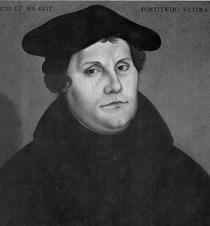
Martin Luther (1483–1546) was a German theologian, an Augustinian monk, and an ecclesiastical reformer whose teachings inspired the Reformation and deeply influenced the doctrines and culture of the Lutheran and Protestant traditions. Luther's call to the Church to return to the teachings of the Bible led to the formation of new traditions within Christianity and to the Counter-Reformation, the Roman Catholic reaction to these movements. Luther's contributions to Western civilization went beyond the life of the Christian Church. Luther's translations of the Bible helped to develop a standard version of the German language and added several principles to the art of translation. Luther's hymns inspired the development of congregational singing in Christianity. His marriage on June 13, 1525, to Katharina von Bora began a movement of clerical marriage within many Christian traditions.

LUTHER'S STRUGGLE TO FIND PEACE WITH GOD
Young Brother Martin fully dedicated himself to monastic life, the effort to do good works to please God and to serve others through prayer for their souls. Yet peace with God escaped him. He devoted himself to fasts, flagellations, long hours in prayer and pilgrimage, and constant confession. The more he tried to do for God, it seemed, the more aware he became of his sinfulness.

LUTHER'S THEORY OF GRACE
The demanding discipline of earning academic degrees and preparing lectures drove Martin Luther to study the Scriptures in depth. Influenced by the call of humanism ad fontes—"to the sources"—he immersed himself in the study of the Bible and the early Church. Soon terms like penance and righteousness took on new meaning for Luther, and he became convinced that the Church had lost sight of several of the central truths of Christianity taught in Scripture—the most important of which being the doctrine of justification by faith alone. Luther began to teach that salvation is completely a gift of God's grace through Christ received by faith.

THE INDULGENCE CONTROVERSY
In addition to his duties as a professor, Martin Luther served as a preacher and confessor at the Castle Church, a foundation of Frederick the Wise, Elector of Saxony. This church was named "All Saints" because it was the repository of his collection of holy relics. This parish served both the Augustinian monastary and the university. It was in the performance of these duties that the young priest was confronted with the effects of obtaining indulgences on the lives of everyday people. An indulgence is a certificate that absolved individuals of the temporal penalties of the sins they had confessed. A buyer could purchase one, either for himself or for one of his deceased relatives in purgatory. The Dominican friar Johann Tetzel was enlisted to travel throughout Archbishop Albert of Mainz's episcopal territories promoting and selling indulgences for the rennovation of St. Peter's Basilica in Rome. Tetzel was very successful at it. He urged: "as soon as the coin in the coffer rings, the soul from purgatory springs" [Brecht, vol. 1, p. 182].

As a priest concerned about the spiritual welfare of his parishioners, Luther saw this traffic in indulgences as an abuse that could mislead them into relying simply on the indulgences themselves to the neglect of the confession, true repentance, and satisfactions. Luther preached three sermons against indulgences in 1516 and 1517. On October 31, 1517, according to traditional accounts, Luther's 95 Theses were nailed to the door of the Castle Church as an open invitation to debate them [Brecht, vol. 1, p. 200].

The Theses condemned greed and worldliness in the Church as an abuse and asked for a theological disputation on what indulgences could grant. Luther did not challenge the authority of the pope to grant indulgences in these theses. The 95 Theses were quickly translated into German, widely copied and printed. Within two weeks they had spread throughout Germany, and within two months throughout Europe. This was one of the first events in history that was profoundly affected by the printing press, which made the distribution of documents easier and more wide-spread. - From Wikipedia, the free encyclopedia.

More to come...

Wednesday, October 26, 2005

everlasting god-shopper


"Every time I buy something, I come as close to making myself god as I can. I take a piece of intrinsically worthless plastic and use it to generate a pulse down a fibre-optic cable that turns into a book, a car, a house. I transubstantiate a piece of paper into silver or gold. I wave a $100 bill in a restaurant, and others come running to do my every bidding. In each case, for a brief moment, I fool myself into thinking that I am at the very least a priest who can use divine power as he wills; at best a god, master of the universe, the one who proposes, disposes, creates and sustains at his own will."

Read more: The Wages of Spin by Carl Trueman

horrifying theology


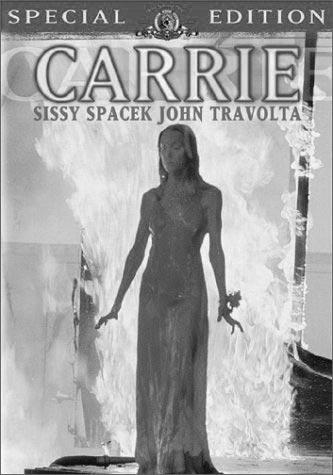
I like horror movies. Not the mindless slasher flicks, but the ones that make you think. "Horror movies don't make you think?!", "They're just gross!" some may say. True, there may be some gross scenes in horror films, but if it's a good one, that will be a secondary element to help convey the story, not drive it. One such movie is Carrie. I watched it last night for the first time. I've always wanted to see it, and when I did, I wasn't dissapointed.

There have been other movies I've waited years to see, only to realize I'd wasted my time, but this one delivered. At first, I supposed this movie to be about an evil girl who wreaks havoc on helpless teenagers. Nothing could be further from the truth (although there is that big climactic scene in the school gymnasium - however, after seeing it, that's not THE climactic scene.)

It's ultimately about human depravity and the violence each one of us is capable of inflicting on others, no matter how "holy" we feel. There's a repeating element in this movie of physical violence: boyfriend to girlfriend, teacher to student, mother to daughter, and ultimately telekinetic girl to classmates. The movie focuses on the character of Carrie, but it's a statement about us all. It deals with abuse, guilt, love and treachery, all successfully executed.

Sure, there are disturbing scenes, and it's definitely not for children, but what's really disturbing is the way in which it exposes how cruel we are and how desperately we need to be saved from judgement.

Tuesday, October 25, 2005

batman & grace


Batman Begins is a great film. There's one line that got me to thinking. It goes something like, "it's not who you are on the inside, but what you do that matters." In the context of the movie, that's a great line because Bruce Wayne deals with his fear and also his desire to do something to bring justice to the city of Gotham.

In terms of being justified (declared not guilty) by God, it's the exact opposite, however. It's not what you do that determines your justification, but the faith INSIDE that God grants to you:

"What then shall we say was gained by Abraham, our forefather according to the flesh? For if Abraham was justified by works, he has something to boast about, but not before God. For what does the Scripture say? "Abraham believed God, and it was counted to him as righteousness." Now to the one who works, his wages are not counted as a gift but as his due. And to the one who does not work but trusts him who justifies the ungodly, his faith is counted as righteousness, just as David also speaks of the blessing of the one to whom God counts righteousness apart from works:

'Blessed are those whose lawless deeds are forgiven, and whose sins are covered; blessed is the man against whom the Lord will not count his sin.' " - Romans 4:1-7 esv

Monday, October 24, 2005

how about a nice slice of the word?


"Study to shew thyself approved unto God, a workman that needeth not to be ashamed, rightly dividing the word of truth." - 2 Tim 2:15

"Dividing aright the word of truth. This is a beautiful metaphor, and one that skillfully expresses the chief design of teaching. Since we ought to be satisfied with the word of God alone, what purpose is served by having sermons every day, or even the office of pastors? Has not every person an opportunity of reading the Bible? But Paul assigns to teachers the duty of dividing or cutting, as if a father, in giving food to his children, were dividing the bread, by cutting it into small pieces.

He advises Timothy to "cut aright," lest, when he is employed in cutting the surface, as unskillful people are wont to do, he leave the pith and marrow untouched. Yet by this term I understand, generally, an allotment of the word which is judicious, and which is well suited to the profit of the hearers. Some mutilate it, others tear it, others torture it, others break it in pieces, others, keeping by the outside, (as we have said,) never come to the soul of doctrine. To all these faults he contrasts time "dividing aright," that is, the manner of explaining which is adapted to edification; for that is the rule by which we must try all interpretation of Scripture." - excerpt from Calvin's Commentary

Friday, October 21, 2005

my favorite book of the bible


Romans is my favorite book of the Bible. Why? I'll let Luther answer for me...

"This letter is truly the most important piece in the New Testament. It is purest Gospel. It is well worth a Christian's while not only to memorize it word for word but also to occupy himself with it daily, as though it were the daily bread of the soul. It is impossible to read or to meditate on this letter too much or too well. The more one deals with it, the more precious it becomes and the better it tastes." - Luther in his preface to Romans

"But now the righteousness of God has been manifested apart from the law, although the Law and the Prophets bear witness to it-- the righteousness of God through faith in Jesus Christ for all who believe. For there is no distinction: for all have sinned and fall short of the glory of God, and are justified by his grace as a gift, through the redemption that is in Christ Jesus, whom God put forward as a propitiation by his blood, to be received by faith. This was to show God's righteousness, because in his divine forbearance he had passed over former sins. It was to show his righteousness at the present time, so that he might be just and the justifier of the one who has faith in Jesus." - Rom 3:21-26

Thursday, October 20, 2005

death is preaching to us


This morning, I saw a dead pigeon. I think it must have flown into a window. It was lying there on the concrete, looking almost as if it were asleep. Nope. It was dead.

We don't usually think just how short our lives are - let alone if we die by sickness or accident - but as a Christian, there's so much to look forward to, and so much to live for now.

"Each fading leaf admonishes you. You will most surely have to die; why not think upon the inevitable? It is said that the ostrich buries its head in the sand, and fancies itself secure when it can no longer see the hunter. I can hardly fancy that even a bird can be quite so foolish, and I beseech you do not enact such madness.

If I do not think of death, yet death will think of me. If I will not go to death by meditation and consideration, death will come to me. Let me, then, meet it like a man, and to that end let me look it in the face. Death comes into our houses, and steals away our beloved ones.

Seldom do I enter this pulpit without missing some accustomed face from its place. Never a week passes over this church without some of our happy fellowship being caught away to the still happier fellowship above. This week a youthful member has melted away, and her mourning parents are in our midst. We as a congregation are continually being summoned to remember our mortality; and so, whether we will hear him or not, death is preaching to us each time we assemble in this house." - C.H. Spurgeon

taken from Concerning Death by C.H. Spurgon