

Here's a great quote concerning the theme of the bible:
"The "law" given to the first Adam, the first son of God, was broken, and mankind was thrown out of the garden into the wilderness. The law given to Israel, the son of God, was broken, and the nation was thrown out of its promised land into the wilderness of exile. A last Adam came as the truly obedient covenant partner of God, signifying his identification with a people that desperately needed his help. We can almost hear heaven's sigh of relief, 'At last! A true Son of God.' 'You are my beloved son in whom I am well pleased' is God's word of approval. Then this true Adam, this true Israel, goes out into our wilderness to be tempted and to be victorious, so that he might make for us a way back into the garden of God."
-G. Goldsworthy

Subscribe To

 Posts
All Comments
Posts
All Comments
Monday, January 30, 2006


Monday, January 23, 2006
a completed sacrifice
And he shall put his hand upon the head of the burnt offering: and it shall be accepted for him to make atonement for him. (Leviticus 1:4)
If by that laying on of his hand the bullock became the offerer's sacrifice, how much more shall Jesus become ours by the laying on of the hand of faith?
My faith doth lay her hand On that dear head of Thine, While like a penitent I stand, And there confess my sin.
If a bullock could be accepted for him to make atonement for him, how much more shall the Lord Jesus be our full and all-sufficient propitiation? Some quarrel with the great truth of substitution; but as for us, it is our hope, our joy, our boast, our all. Jesus is accepted for us to make atonement for us, and we are "accepted in the Beloved." Let the reader take care at once to lay his hand on the Lord's completed sacrifice, that by accepting it he may obtain the benefit of it. If he has done so once, let him do it again. If he has never done so, let him put out his hand without a moment's delay. Jesus is yours now if you will have Him. Lean on Him -- lean hard on Him -- and He is yours beyond all question; you are reconciled to God, your sins are blotted out, and you are the Lord's.
-C.H. Spurgeon
Thursday, January 19, 2006
calvin on good works
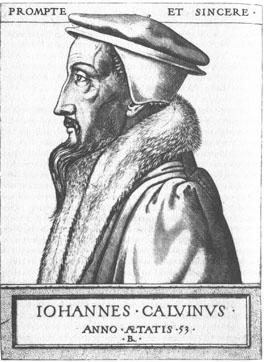
1. We have no good works which God rewards but those which we derive from his grace.
2. The good works which we perform by the guidance and direction of the Holy Spirit, are the fruits of that adoption which is an act of free grace.
3. They are not only unworthy of the smallest and most inconsiderable reward, but deserve to be wholly condemned, because they are always stained by many blemishes; and what have pollutions to do with the presence of God?
4. Though a reward had been a thousand times promised to works, yet it is not due but by fulfilling the condition of obeying the law perfectly; and how widely distant are we all from that perfection!
Let Papists now go and attempt to force their way into heaven by the merit of works. We cheerfully concur with Paul and with the whole Bible in acknowledging, that we are unable to do anything but by the free grace of God, and yet that the benefits resulting from our works receive the name of a reward.
Monday, January 16, 2006
keeping watch

“What are the signs of the end and how do amillennial Christians interpret them?”
read Keeping Watch by Kim Riddlebarger
Thursday, January 12, 2006
pray for the peace of jeru... i mean, the church

"Pray for the peace of Jerusalem" was on a bumper sticker I saw a few days ago. Is it wrong to pray this? No. But if you insist it's because God wants us to pray for the nation of Israel because they are His chosen people, well then I'd have a problem with that. Why? Read below:
O. Palmer Robertson on the Israel of God:
The recognition of a distinctive people who are the recipients of God’s redemptive blessings and yet who have a separate existence apart from the church of Jesus Christ creates insuperable theological problems. Jesus Christ has only one body and only one bride, one people that he claims as his own, which is the true Israel of God. This one people is made up of Jews and Gentiles who believe that Jesus is the promised Messiah.
This is taken from an article by Michael Marlowe called The Israel of God
Read more
Wednesday, January 04, 2006
the church's one foundation

The Church's One Foundation
by Samuel J. Stone (1866)
The Church's one foundation is Jesus Christ her Lord,
She is His new creation by water and the Word.
From heaven He came and sought her to be His holy bride;
With His own blood He bought her and for her life He died.
She is from every nation, yet one o'er all the earth;
Her charter of salvation, one Lord, one faith, one birth;
One holy Name she blesses, partakes one holy food,
And to one hope she presses, with every grace endued.
The Church shall never perish! Her dear Lord to defend,
To guide, sustain, and cherish, is with her to the end:
Though there be those who hate her, and false sons in her pale,
Against or foe or traitor she ever shall prevail.
Though with a scornful wonder men see her sore oppressed,
By schisms rent asunder, by heresies distressed:
Yet saints their watch are keeping, their cry goes up, "How long?"
And soon the night of weeping shall be the morn of song!
’Mid toil and tribulation, and tumult of her war,
She waits the consummation of peace forevermore;
Till, with the vision glorious, her longing eyes are blest,
And the great Church victorious shall be the Church at rest.
Yet she on earth hath union with God the Three in One,
And mystic sweet communion with those whose rest is won,
With all her sons and daughters who, by the Master’s hand
Led through the deathly waters, repose in Eden land.
O happy ones and holy! Lord, give us grace that we
Like them, the meek and lowly, on high may dwell with Thee:
There, past the border mountains, where in sweet vales the Bride
With Thee by living fountains forever shall abide!
Thursday, December 22, 2005
the theme of the bible is...

Ethics? Salvation? Moral Guidelines?
This Christmas, as we celebrate the entrance of the second person of the trinity into this world, keep in mind the ultimate plan of God. Not only was He born to die for our sins, but by His life and death He started the process of reversing the curse, thus bringing His people into the Kingdom of God. Think of Genesis and Revelation as bookends of the Kingdom of God. The garden of Eden was the first Kingdom manifestation with us; the Revelation speaks of the final consumation of the RESTORATION of that kingdom. Everything in the middle deals with the losing of that Kingdom, and God's work to restore it again; the birth of Christ playing the central role as the solution and the perfect embodiment of the people of God for us.
"The theme of the Bible is the kingdom of God. That is where the biblical account both starts and finishes. Salvation is the means by which the sovereign God brings sinful people into that kingdom as its willing and acceptable subjects..."
>read more of Graeme Goldsworthy's article, The Kingdom of God and the Old Testament
Friday, December 16, 2005
God leaves us, sometimes

How is this comforting? The bible says He never leaves us or forsakes us right? Right. Yet that's not what I'm talking about. Read below and be comforted knowing that those seasons when you feel far from God or especially sinful, are for a purpose.
"The most wise, righteous, and gracious God doth oftentimes leave, for a season, his own children to manifold temptations, and the corruption of their own hearts, to chastise them for their former sins, or to discover unto them the hidden strength of corruption and deceitfulness of their hearts, that they may be humbled; and, to raise them to a more close and constant dependence for their support upon himself, and to make them more watchful against all future occasions of sin, and for sundry other just and holy ends." - from Chapter 5 (Providence) of the Westminster Confession of Faith
Wednesday, December 07, 2005
opinion editorial, circa 33 A.D.

Excerpt from the Opinion Page,
The Palestine Conservative,
33 A.D.
Recently, Jewish conservatives were praying for God to put a Jewish Conservative into office. That man, they thought, was Jesus of Nazareth, a carpenter-turned-rabbi. But he didn't even want to accept their nomination. He kept TALKING about the kingdom, but when it came time for him to "step up to the plate" and "walk the talk", he didn't! How frustrating! This man, who obviously was gifted in leadership and who had a strong moral compass, would have been the perfect man for the job!
This country has been sliding into moral decay and decadence for several hundred years, away from it's founding father, Abraham. We needed someone to take the reins with a firm grip and steer Palestine back to God. What we got was a lynching, a crucifixion, and some rumors about a resurrection. It's sad really. He would have had the votes, it would have been a landslide victory. But I guess some people don't care about God and His law anymore.
Now his followers, who've formed a cult, are actually claiming that the Covenant is done away with! It's been fulfilled! Blasphemy I tell you. Tell me, who's supposed to obey God with no LAW! How is a country supposed to be based on a Judeo ethic, if you do away with the law?!
doctrine is practical
Doctrine Is Practical
by John MacArthur
I have in my library a book by the spiritual father of a quasi-Christian cult. He argues that doctrinal statements, systematic theology and propositional truth claims are contrary to the spirit of Jesus' ministry.
That seemed a rather bizarre notion when I first heard it years ago. But the belief that Christ is against doctrine is a notion I seem to be encountering with increasing frequency.
No idea could be much further from the truth. The word doctrine simply means "teaching." And it's ludicrous to say that Christ is anti-teaching. The central imperative of His Great Commission is the command to teach (Matthew 28:18-20).
Yet there's no shortage of church-growth experts, professional pollsters, and even seminary professors nowadays who are cautioning young pastors that doctrine is too divisive, too threatening, too heady and theoretical—and therefore simply impractical.
Impractical? I agree that practical application is vital. I don't want to minimize its importance. But if there is a deficiency in preaching today, it is that there's too much relational, pseudo-psychological, and thinly life-related content, and not enough emphasis on sound doctrine.
Moreover, the distinction between doctrinal and practical truth is completely artificial; doctrine is practical. In fact, nothing is more practical than sound doctrine, because there's ultimately no basis for godly behavior apart from the truth of God's Word.
Practical insights, gimmicks, and illustrations mean little if they are divorced from divine principle. Before the preacher asks anyone to perform a certain duty, he must first deal with doctrine. He must develop his message around theological themes and draw out the principles of the texts. Then the truth can be applied.
Romans provides the clearest example. Paul doesn't give any exhortation until he has given eleven chapters of theology.
He scales incredible heights of truth, culminating in 11:33-36, where he says, "Oh, the depth of the riches both of the wisdom and knowledge of God! How unsearchable are His judgments and unfathomable His ways! For who has known the mind of the Lord, or who became His counselor? Or who has first given Him that it might be paid back to Him again? For from Him and through Him and to Him are all things. To Him be the glory forever. Amen."
Then in chapter 12, he turns immediately to the practical consequences of the doctrine of the first 11 chapters. No passage in Scripture captures the Christian's responsibility in the face of truth more clearly than Romans 12:1-2. Resting on eleven chapters of profound doctrine, Paul calls each believer to a supreme act of spiritual worship—giving oneself as a living sacrifice.
So doctrine gives rise to devotion to Christ. What could be more practical? And the remainder of the book of Romans goes on to explain still more practical outworkings of one's dedication to Christ.
Paul follows the same pattern in Galatians, Ephesians, Philippians, Colossians, and 1 Thessalonians. The doctrinal message comes first. Upon that foundation he builds the practical application, making the logical connection with the word therefore (Romans 12:1; Galatians 5:1; Ephesians 4:1; Philippians 2:1) or then (Colossians 3:1; 1 Thessalonians 4:1).
So we have imposed an artificial meaning on the word doctrine. We've made it something abstract and threatening, unrelated to daily living. That has brought about the disastrous idea that preaching and teaching are unrelated to living.
The scriptural concept of doctrine includes the entire message of the gospel—its teaching about God, salvation, sin, and righteousness. Those concepts are so tightly bound to daily living that the first-century mind did not see them as something separate from practical truth.
The New Testament church was founded on a solid base of doctrine. First Timothy 3:16 contains what many expositors believe is an early church hymn: "God was manifest in the flesh, justified in the spirit, seen of angels, preached unto the Gentiles, believed on in the world, received up into glory." There, in capsule form, is the basis of all Christian teaching. Without that, no practical application matters.
The next few verses of 1 Timothy describe what happens when men depart from the basis of biblical truth: "Some will fall away from the faith, paying attention to deceitful spirits and doctrines of demons, by means of the hypocrisy of liars seared in their own conscience as with a branding iron, men who forbid marriage and advocate abstaining from foods, which God has created to be gratefully shared in by those who believe and know the truth" (4:1-3).
In other words, lying, hypocrisy, a dulled conscience, and false religious practices all have root in wrong doctrine.
No ministry activity is more important than rightly understanding and clearly proclaiming sound doctrine. In 1 and 2 Timothy and Titus, Paul commissions two young men to the ministry. His central theme is the importance of adhering to sound doctrine.
Paul charged Timothy: "In pointing out these things to the brethren, you will be a good servant of Christ Jesus, constantly nourished on the words of the faith and of the sound doctrine which you have been following" (1 Tim. 4:6). "Pay close attention to yourself and to your teaching," Paul adds, "persevere in these things; for as you do this you will insure salvation both for yourself and for those who hear you" (v. 16).
Titus 2:10 says we "adorn [or honor] the doctrine of God" by how we live. When it comes to affirming sound doctrine, what we do carries far more significance than what we say. That's why it's disastrous when a pastor, seminary professor, or any kind of Christian leader fails morally. The message he proclaims is that his doctrine is unrelated to life. And for those whose lives he has touched, doctrine becomes merely an intellectual exercise.
True doctrine transforms behavior as it is woven into the fabric of everyday life. But it must be understood if it is to have its impact. The real challenge of the ministry is to dispense the truth clearly and accurately. Practical application comes easily by comparison.
Tuesday, December 06, 2005
how do you read the bible?

Do you see the Scriptures primarily as an "instruction book" as one bumper sticker says, or do you see it as separated into different dispensations? Is the Bible a good "moral guide"? Or is there something more?
Might I suggest learning about covenantal theology. Seeing the Bible as a story of redemption with two primary covenants, the covenant of "works" with Adam, and the covenant of "grace" has given me a great perspective on the scriptures as a whole. It's kind of like seeing the box top of a puzzle, instead of only the individual pieces.
The most important benefit of reading the scriptures this way is that it focuses on what the Bible says is important, namely Christ and the redemption of His people. As Jesus said to the men on the road to Emmaus in Luke 24:
"And he said to them, "O foolish ones, and slow of heart to believe all that the prophets have spoken! Was it not necessary that the Christ should suffer these things and enter into his glory?" And beginning with Moses and all the Prophets, he interpreted to them in all the Scriptures the things concerning himself."...
... "They said to each other, "Did not our hearts burn within us while he talked to us on the road, while he opened to us the Scriptures?"...
... "Then he said to them, "These are my words that I spoke to you while I was still with you, that everything written about me in the Law of Moses and the Prophets and the Psalms must be fulfilled." Then he opened their minds to understand the Scriptures, and said to them, "Thus it is written, that the Christ should suffer and on the third day rise from the dead, and that repentance and forgiveness of sins should be proclaimed in his name to all nations, beginning from Jerusalem."
Here's a great summary of Covenant Theology:
"Covenant is from the Hebrew [ber-eeth] meaning to cut, and by extension means a promise or pledge to do something. "It is an agreement upon the promises concerning the relationship between two or more parties. In Biblical terms the covenant is the prime agency of God's self-revelation in history. God reveals Himself to be the covenant God. The essence of the covenant between God and man is "I will be your God, and you will be My people." The probationary covenant of life by which man was to keep God's commandments perfectly was ultimately and consummately fulfilled by Christ, God in the flesh. The covenant of grace is that by which God's elect are attributed Christ's satisfaction by faith. An understanding of the covenant is central to understanding the history of redemption. Covenant theology is that system of theology which recognizes the successive covenants of Scripture as a unity, and the means by which God orders His creation and brings about redemption for His elect."
>Read more
Friday, December 02, 2005
sinning against our conscience

Let us stick to truth and righteousness. By God's grace let us imitate our Lord and Master, in whose mouth no deceit was ever found. Let us not be afraid of being poor, nor of being treated with contempt. Never, on any account whatever, let us do that which our conscience cannot justify. If we lose inward peace, we lose more than a fortune can buy. If we keep in the Lord's own way and never sin against our conscience, our way is sure against all comers. Who is he that can harm us if we be followers of that which is good? We may be thought fools by fools if we are firm in our integrity; but in the place where judgment is infallible we shall be approved. - C.H. Spurgeon
Wednesday, November 30, 2005
are you bad enough to be a christian?

Below is a thought-provoking excerpt from Dory at Wittenberg Gate
Many people suppose that Christians are people who think they are getting into heaven because they have been good enough. The truth is, people who think they are good enough to get into heaven, are not Christians at all. In fact, such people are not even ready to hear the good news about what Christ has done for His people. They first have to be convinced that they have been bad enough to need Jesus’ help in the first place.
What they don’t understand is that God does not grade on a curve. He doesn’t weigh good deeds against bad deeds or let us into heaven because we’ve been pretty good. God says that every sin against His holy law makes us deserving of an eternity in Hell. Every sin--not just the big ones, such as murder or adultery, but the little ones, too, such as cheating on a math test or stealing cigarettes from Mother’s purse. God demands that we be perfect.
This puts us all in the same tough spot, because, as the Bible tells us, “there is none righteous, no, not one.” From the sweetest ‘goody-two-shoes’ to the meanest criminal--from the most successful, upstanding businessman to the most miserable failure--we will all stand before God and be found unacceptable in His sight.
Unless, that is, Christ stands in our place. And that, you see, is the good news.
It is not God’s desire that everyone go to Hell forever. He wants to save from Hell a huge number of people--more than we can count and from every race and nationality of people on the earth. In this case, we can be particularly glad that God always gets what He wants!
But God must save us in a just way. After all, if a man was a judge in a courtroom and he knowlingly let a guilty man go free, we would rightly say he was an unjust judge. God sees to it that every sin gets the just punishment it deserves. He is perfectly just.
The Son of God, in the greatest act of love that ever was, took on human flesh and became the Man, Jesus Christ. So Jesus was fully God and fully human in one person. Then Jesus did something that no other human being has ever done. He lived a perfect life. That’s right, He never sinned--not even a little bit. He never rolled His eyes at His mother. He never had a lustful thought. He never stole a piece of bread.
Then Jesus presented Himself to God the Father as a perfect substitute for the people He would save. He agreed that He would take the punishment His people deserve, so God could justly declare that those sins were already paid for. It’s as if I borrowed a hundred dollars, but someone else paid off the loan. My debt is paid and can’t be brought up to me again, even though I didn’t pay it.
This is what Jesus was doing when He died on the cross. He took upon Himself all the guilt of His people and He paid the debt they owed. He allowed Himself to be punished for the sins of others. And because Jesus is also God--the Giver of Life--He was able to overcome death and rise again to life.
Did Jesus make Himself a sacrifice for people who earned it and deserved it? No! He died for people who had no way of gaining entrance to heaven on their own. The Bible calls this gift He gave an act of grace. Grace is the giving of a gift to someone who does not deserve it and has done nothing to earn it.
Now when His people die and stand before the throne of God and Satan accuses them of this sin or that, Jesus answers, “But I have paid for that sin. There is no condemnation left for this person.”
No condemnation! What a wonderful thought! In fact, it is a life-changing thought. But only if you believe it is true. If I told you that if you believe it, you could turn stones into gold, you couldn’t make yourself believe such a thing no matter how hard you tried. You might be able to pretend you believed it, but you wouldn’t really believe it.
Believing that Christ died for your sins and that you can stand before God with no condemnation is like that, too. Either people believe it or they don’t. It is God who enables people to believe this, and when He does, it changes their lives. We call this faith.
Faith is trusting Christ alone to save you from your sins. It is not trusting your own good behavior or the blessing of some church or another. It is not trusting in prayers or altar calls. Christ saves His people and we can add nothing to His work to make it better. Sometimes we have trouble believing this because we feel like there must be something we can do or something we must do. It is so amazing to think this grace is free!
God gives His people a most precious privilege--the privilege of prayer. Remember, if you have faith, you do not stand before God now as a condemned criminal. You stand before Him in the righteousness of Jesus Christ. God tells us that His people are adopted sons and daughters. You can speak to God as a child speaks to a loving father. When we pray to God, we can safely admit our sins to Him. We can ask for the things we need. We can ask for food and clothing and wisdom and a stronger faith. Unlike many earthly fathers, our heavenly Father will never forget us, nor forsake us, nor do us any wrong.
So, if you think you are bad enough to need Jesus Christ to save you from your sins, and if you believe His death on the cross is the only means by which you can be saved, then you can be assured that God has done what He promised!
May God bless you with a growing faith and confidence in Jesus Christ, our Lord.
Romans 10:13 “For ‘whoever calls on the name of the Lord shall be saved’.”
Matthew 9:12-13 “And when the Pharisees saw it, they said to His disciples, “Why does your teacher eat with tax collectors and sinners?” When Jesus heard that, He said to them, “Those who are well have no need of a physician, but those who are sick. But go and learn what this means, ‘I desire mercy and not sacrifice, For I did not come to call the righteous, but sinners to repentance.’”
Romans 5:6-9 “For when we were still without strength, in due time Christ died for the ungodly. For scarcely for a righteous man will one die; yet perhaps for a good man someone would even dare to die. But God demonstrates His own love toward us, in that while we were still sinners, Christ died for us. Much more then, having now been justified by His blood, we shall be saved from wrath through Him.”
Romans 8:1 “There is therefore no condemnation to those who are in Christ Jesus, who do not walk according to the flesh, but according to the Spirit.”
Tuesday, November 29, 2005
beza on law and gospel
That which we call The Word of God: Its two parts, the Law and the Gospel by Theodore Beza (1519-1605)
On this subject we call the "Word of God" (for we know well that the Eternal Son of God is also so named) the canonical books of the Old and New Testament; for they proceed from the mouth of God Himself.
We divide this Word into two principal parts or kinds: the one is called the "Law", the other the "Gospel". For, all the rest can be gathered under the one or the other of these two headings.
WHAT IS LAW?
What we call Law (when it is distinguished from Gospel and is taken for one of the two parts of the Word) is a doctrine whose seed is written by nature in our hearts. However, so that we may have a more exact knowledge, it was written by God on two Tables and is briefly comprehended in ten commandments. In these He sets out for us the obedience and perfect righteousness which we owe to His majesty and our neighbours. This on contrasting terms: either perpetual life, if we perfectly keep the Law without omitting a single point, or eternal death, if we do not completely fulfil the contents of each commandment (Deut. 30:15-20; James 2:10).
WHAT IS GOSPEL?
What we call the Gospel ("Good News") is a doctrine which is not at all in us by nature, but which is revealed from Heaven (Matt 16:17; John 1:13), and totally surpasses natural knowledge. By it God testifies to us that it is His purpose to save us freely by His only Son (Rom. 3:20-22), provided that, by faith, we embrace Him as our only wisdom, righteousness, sanctification and redemption (1 Cor 1:30). By it, I say, the Lord testifies to us all these things, and even does it in such a manner that at the same time he renews our persons in a powerful way so that we may embrace the benefits which are offered to us (1 Cor 2:4)
>continue reading
Monday, November 28, 2005
monergism vs. synergism

And you He made alive, who were dead in trespasses and sins - Ephesians 2:1
Does God do all the work in salvation (monergism), or is there a cooperation that takes place between God and myself (synergism)? I would argue for monergism. Here's a great excerpt from John Hendrix on this topic:
The great Puritan Divine Richard Sibbes once said, "God knoweth we have nothing of ourselves, therefore in the covenant of grace he requireth no more than he giveth, and giveth what he requireth, and accepteth what he giveth."
In other words, what God requires of us (faith, repentance, to love Him supremely) he grants to us in Christ (2 Timothy 2:25; Eph 2:5,8). This means that while there are many precious promises declared to us in the gospel (Rom 10:4), yet the Lord understands that the outward letter, even though vigorously preached, does not itself spiritually enable sinners to receive Jesus for righteousness and salvation. A command and a promise is established in the gospel that whoever receives Jesus will be accepted and justified. Yet none of us, due to our natural love for darkness, are inclined to receive the Christ of the gospel (John 3:19). Therefore, in His great mercy to those He loves, Jesus sends His Holy Spirit to quicken us (John 6:63; John 1:13, 3:6) to a living faith that apprehends Christ and His benefits. The dead in sin are granted new life (John 5:25) by the Spirit who works in us all that is required to be made partakers of his righteousness that we might be reconciled to God. As the Spirit illumines and regenerates the soul, Christ's perfect faith and obedience are reckoned to us by God's grace, and on account of Him are we accepted as righteous before Him. What we sinners were incapable of due to pride and evil inclinations, Christ purchased for us as the Spirit unites us to His life, death and resurrection. This was so the righteousness of the law might be met in us. This purchased grace which includes our regeneration, justification and sanctification is all that power and righteousness which Christ has procured for us and of which He makes us partakers.
> Read more from John Hendrix's article, The Work of the Trinity in Monergism
Wednesday, November 23, 2005
acquiring perseverance

Acquiring Perseverance
The Lord thy God will put out those nations before thee by little and little. (Deuteronomy 7:22)
We are not to expect to win victories for the Lord Jesus by a single blow. Evil principles and practices die hard. In some places it takes years of labor to drive out even one of the many vices which defile the inhabitants. We must carry on the war with all our might, even when favored with little manifest success.
Our business in this world is to conquer it for Jesus. We are not to make compromises but to exterminate evils. We are not to seek popularity but to wage unceasing war with iniquity. Infidelity, popery, drink, impurity, oppression, worldliness, error; these are all to be "put out."
The Lord our God can alone accomplish this. He works by His faithful servants, and blessed be His name. He promises that He will so work. "Jehovah thy God will put out those nations before thee." This He will do by degrees that we may learn perseverance, may increase in faith, may earnestly watch, and may avoid carnal security. Let us thank God for a little success and pray for more. Let us never sheathe the sword till the whole land is won for Jesus.
Courage, my heart! Go on little by little, for many littles will make a great whole.
- from Faith's Checkbook, a devotional by C.H. Spurgeon
Monday, November 21, 2005
drawing near to God

Draw near to God, and he will draw near to you. - James 4:8
Why are we instructed to draw near to God? Because of love. We have been united in a magnificent loving relationship with Christ. Our union with Christ is a great topic for study. It assures and strengthens us, and reminds us of the tremendous feat Christ accomplished for us in our redemption.
"The saints were from the beginning joined to Christ by bands of everlasting love. Before he took on him their nature, or brought them into a conscious enjoyment of himself, his heart was set upon their persons, and his soul delighted in them. Long ere the worlds were made, his prescient eye beheld his chosen, and viewed them with delight. Strong were the indissoluble bands of love which then united Jesus to the souls whom he determined to redeem. Not bars of brass, or triple steel, could have been more real and effectual bonds. True love, of all things in the universe, has the greatest cementing force, and will bear the greatest strain, and endure the heaviest pressure: who shall tell what trials the Savior's love has borne, and how well it has sustained them? Never union more true than this. As the soul of Jonathan was knit to the soul of David so that he loved David as his own soul, so was our glorious Lord united and joined to us by the ties of fervent, faithful love. Love has a most potent power in effecting and sustaining union, but never does it display its force so well as when we see it bringing the Maker into oneness with the creature, the divine into alliance with the human. This, then, is to be regarded as the day-spring of union,—the love of Christ Jesus the Lord embracing in its folds the whole of the elected family." - excerpt from Spurgeon's Bands of Love: or, Union to Christ
Tuesday, November 15, 2005
give & take

We hear all the time what Christ took. He took upon Himself our sins on the cross. More specifically, He took the punishment our sins deserve from the Father on the Cross. He took hell for us.
What we don't usually hear, is what He gave us. He gave us His righteousness. "Why didn't Christ just come to earth as a man and go to the cross?" some may ask. Because a vital part of Christ's work is His life as well as His death. He had to "fulfill all righteousness". He obeyed the law perfectly - doing what Adam was supposed to do (Rom 5) - and thus fulfilling the covenant of grace on our behalf. He fulfilled the law - doing what Israel was supposed to do after the Exodus.
This righteousness that Christ merited is credited to our account when we are justified (declared "not guilty"). It's not enough for Chirst to die and take our sins, He must also give us His righteousness for us to be justified.
Here's a great definition from Charles R. Biggs:
"Justification, the cardinal principle of the Reformation, is the heart of the Reformed or Presbyterian faith as truly as it is of the evangelical or Lutheran doctrine. It refers to the divine act whereby God freely makes humans, who are sinful and therefore worthy of condemnation, acceptable before a God who is holy and righteous. "Justification is forensic (that is, it is "courtroom language"). We are declared, counted or reckoned to be righteous when God imputes the righteousness of Christ (an "alien righteousness") to our account. In other words, the Judge of all the earth declares us "not guilty" when we believe because Christ was pronounced "guilty" for us on the cross. We are not first made righteous, then declared righteous; we are declared righteous by grace through faith in Christ, then made righteous! When we believe, God imputes Christ's righteousness to us 'as if' it were our own. However, it is HIS righteousness, that is why Paul says in Romans 1:17 that there is a righteousness that has been revealed from God, a righteousness not of our own, but a righteousness revealed from God and freely given to those who do not work, but to those who believe."
Justification Made Plain by C. H. Spurgeon
Monday, November 14, 2005
can i know God's will for my life?

Well, that depends on which "will" you're talking about. Here's a great excerpt from R.C. Sproul's book, Essential Truths of the Christian Faith:
The Will of God
by R. C. Sproul
Doris Day sang a popular song entitled "Que Sera, Sera," "What will be, will be." At first glance this theme communicates a kind of fatalism that is depressing. Islamic theology frequently says of specific events, "It is the will of Allah."
The Bible is deeply concerned about the will of God – His sovereign authority over His creation and everything in it. When we speak about God's will we do so in at least three different ways. The broader concept is known as God's decretive, sovereign, or hidden will. By this, theologians refer to the will of God by which He sovereignly ordains everything that comes to pass. Because God is sovereign and His will can never be frustrated, we can be sure that nothing happens over which He is not in control. He at least must "permit" whatever happens to happen. Yet even when God passively permits things to happen, He chooses to permit them in that He always has the power and right to intervene and prevent the actions and events of this world. Insofar as He lets things happen, He has "willed" them in this certain sense.
Though God's sovereign will is often hidden from us until after it comes to pass, there is one aspect of His will that is plain to us---His preceptive will. Here God reveals His will through His holy law. For example, it is the will of God that we do not steal; that we love our enemies; that we repent; that we be holy. This aspect of God's will is revealed in His Word as well as in our conscience, by which God has written His moral law upon our heart.
His laws, whether they be found in the Scripture or in the heart, are binding. We have no authority to violate this will. We have the power or ability to thwart the preceptive will of God, though never the right to do so. Nor can we excuse ourselves for sinning by saying, "Que sera, sera." It may be God's sovereign or hidden will that we be "permitted" to sin, as he brings His sovereign will to pass even through and by means of the sinful acts of people. God ordained that Jesus be betrayed by the instrument of Judas's treachery. Yet this makes Judas's sin no less evil or treacherous. When God "permits" us to break His preceptive will, it is not to be understood as permission in the moral sense of His granting us a moral right. His permission gives us the power, but not the right to sin.
The third way the Bible speaks of the will of God is with respect to God's will of disposition. This will describes God's attitude. It defines what is pleasing to Him. For example, God takes no delight in the death of the wicked, yet He most surely wills or decrees the death of the wicked. God's ultimate delight is in His own holiness and righteousness. When He judges the world, He delights in the vindication of His own righteousness and justice, yet He is not gleeful in a vindictive sense toward those who receive His judgment. God is pleased when we find our pleasure in obedience. He is sorely displeased when we are disobedient.
Many Christians become preoccupied or even obsessed with finding the "will" of God for their lives. If the will we are seeking is His secret, hidden, or decretive will, then our quest is a fool's errand. The secret counsel of God is His secret. He has not been pleased to make it known to us. Far from being a mark of spirituality,the quest for God's secret will is an unwarranted invasion of God's privacy. God's secret counsel is none of our business. This is partly why the Bible takes such a negative view of fortune-telling, necromancy, and other forms of prohibited practices.
We would be wise to follow the counsel of John Calvin when he said, "When God closes His holy mouth, I will desist from inquiry." The true mark of spirituality is seen in those seeking to know the will of God that is revealed in His preceptive will. It is the godly person who meditates on God's law day and night. While we seek to be "led" by the Holy Spirit, it is vital to remember that the Holy Spirit is primarily leading us into righteousness. We are called to live our lives by every word that proceeds from the mouth of God. It is His revealed will that is our business, indeed, the chief business of our lives.
Summary
1. The three meanings of the will of God:
(a) Sovereign decretive will, the will by which God brings to pass
whatsoever He decrees. This is hidden to us until it happens.
(b) Preceptive will is God's revealed law or commandments, which we have the
power but not the right to break.
(c) Will of disposition describes God's attitude or disposition. It reveals
what is pleasing to Him.
2. God's sovereign "permission" of human sin is not His moral approval.
Chapter 22
pages 67-69
Essentials Truths Of The Christian Faith
R C Sproul
Wednesday, November 09, 2005
is reformed theology committed to transforming culture?
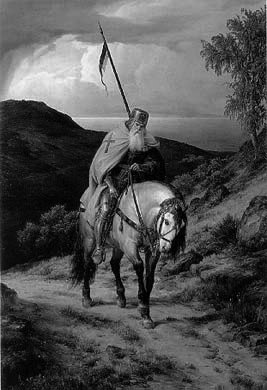
On yesterday's post, I featured an excerpt from R.C. Sproul about reformed theology. I agree with most of it, however, a friend brought up this line from his essay:
"Reformed theology so far transcends the mere five points of Calvinism that it is an entire life and world view. It is covenantal. It is sacramental. It is committed to transforming culture."
Is reformed theology committed to transforming culture? As far as the bible is concerned, cultural transformation isn't really addressed all that much, except when Christ returns. I think reformed theology can definitely have an effect on culture (just look at the legacy of the reformation), but it's not the primary focus of the bible. The focus, instead, is on God in history saving His people from their sins unto Himself. It's a covenantal plan whereby His people are brought out of the kingdom of Satan, and placed into the kingdom of His Son. The consumation of this comes at the end of the world, not now.
Am I saying Christians shouldn't be involved in politics or care? Not at all. As Ken Jones says so well in his article Can Politics Save?, "To look at the world around us we should be outraged at the crime and violence injustices, poverty and corruption. And we should use the political process through personal involvement to make a change. But any positive change should not be construed as salvation or returning America back to God."
Read the full article by Ken Jones
Subscribe to:
Posts (Atom)