Friday, March 24, 2006

an overview of The Lord's supper


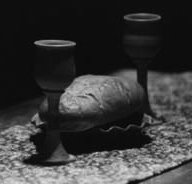
An overview of The Lord's Supper - Charles Hodge

In the Lord's Supper we are said to receive Christ and the benefits of His redemption to our spiritual nourishment and growth in grace. As our natural food imparts life and strength to our bodies, so this sacrament is one of the divinely appointed means to strengthen the principle of life in the soul of the believer and to confirm his faith in the promises of the gospel. By partaking of the bread and wine, the symbols of Christ's body and blood given for us, we are united to Him as our head, our life. He then works in us to will and to do of His own good pleasure. He works in us according to the laws of our nature in the production of everything that is good, so that it is from Him that all holy desires, all good counsels, and all just works proceed. It is not, therefore, we that live, but Christ that liveth in us.

What our Lord said to the apostles He says in the most impressive manner in this ordinance to every believing communicant: "This is my body, broken for you... this is my blood shed for you." These words when received by faith fill the heart with joy, confidence, gratitude, love, and devotion, so that the believer rises from the Lord's table refreshed by the infusion of a new life.

The efficacy of this sacrament, according to the Reformed doctrine, is not to be referred to any virtue in the ordinance itself, whether in its elements or actions; much less to any virtue in the administrator; nor to the mere power of the truths which it signifies; nor to the inherent divine power in the word or promise by which it is attended; nor to the real presence of the material body and blood of Christ (i.e., of the body born of the Virgin), whether by the way of transubstatination, consubstantiaition. or impanation; but only to the blessing of Christ and the working of His Spirit in them that receive the sacrament of His body and blood.

To summarize the Reformed position: The Lord's Supper is a holy ordinance instituted by Christ as a memorial of His death wherein, under the symbols of bread and wine, His body as broken and His blood as shed for the remission of sins are signified and, by the power of the Holy Ghost. sealed and applied to believers. Thereby their union with Christ and their mutual fellowship are set forth and confirmed, their faith strengthened, and their souls nourished unto eternal life.

In this sacrament Christ is present not bodily, but spiritually - not in the sense of local nearness, but of efficacious operation. His people receive Him not with the mouth, but by faith; they do not receive His flesh and blood as material particles, but His body as broken and His blood as shed. The union thus signified and effected is not a corporeal union, not a mixture of substances, but a spiritual and mystical union due to the indwelling of the Holy Spirit. The efficacy of this sacrament as a means of grace is not in the signs, nor in the service, nor in the minister, nor in the word, but in the attending influence of the Holy Ghost.

Monday, March 20, 2006

songs, hymns and spiritual songs


THANK YOU FOR THE CROSS

Even when we turned our backs on You,
In wickedness and lies suppressed the truth.
Even then You showed Your love for us,
Giving up Your life upon a cross.

Jesus, thank You for the cross,
For the blood that sets us free.
The crimson stain of all our sin,
Washed away in Your mercy.

Enemies of God with no excuse,
Knowing what was right we turned from You.
Given up to sin, condemned to die,
Even when You chose to give us life.

Jesus, thank You for the cross,
For the blood that sets us free.
The crimson stain of all our sin,
Washed away in Your mercy.

Every one of us deserves to die,
But You save all who hope in Your great love.


I WILL GLORY IN MY REDEEMER

I will glory in my Redeemer
Whose priceless blood has ransomed me.
Mine was the sin that drove the bitter nails
And hung Him on that Judgment tree.

I will glory in my Redeemer
Who crushed the power of sin and death.
My only Savior before the Holy Judge.
The Lamb who is my righteousness,
The Lamb who is my righteousness.

I will glory in my Redeemer
My life He bought, my love He owns.
I have no longings for another
I'm satisfied in Him alone.

I will glory in my Redeemer
His faithfulness my standing place.
Though foes are mighty and rush upon me;
My feet are firm, held by His grace.

I will glory in my Redeemer
Who carries me on eagle's wings.
He crowns my life with loving kindness
His triumph song I'll ever sing.

I will glory in my Redeemer
Who waits for me at gates of gold
And when He calls me it will be paradise,
His face forever to behold,
His face forever to behold.

Monday, March 13, 2006

forgiveness


"Forgiveness flounders because I exclude the enemy from the community of humans even as I exclude myself from the community of sinners. But no one can be in the presence of the God of the crucified Messiah for long without overcoming this double exclusion - without transposing the enemy from the sphere of monstrous inhumanity into the sphere of shared humanity and herself from the sphere of proud innocence into the sphere of common sinfulness. When one knows that the torturer will not eternally triumph over the victim, one is free to rediscover that person's humanity and imitate God's love for him. And when one knows that God's love is greater than all sin, one is free to see onself in the light of God's justice and so rediscover one's own sinfulness."
-Miroslav Volf

The glory of Christianity is to conquer by forgiveness.
-William Blake
(1757-1827)

Forgiveness does not mean ignoring what has been done or putting a false label on an evil act. It means, rather, that the evil act no longer remains as a barrier to the relationship."
- Martin Luther King Jr.

No child of God sins to that degree as to make himself incapable of forgiveness.
- John Bunyan

Wednesday, March 08, 2006

with a little help from my friends


"Where there is no guidance, a people falls, but in an abundance of counselors there is safety." - Prov 11:14 esv

Here's a great piece of advice about making decisions in life:

Faith Versus Presumption

So she said to Abram, "The Lord has kept me from having children. Go, sleep with my maidservant; perhaps I can build a family through her." Abram agreed to what Sarai said.
Genesis 16:2

Presumption is based on our own reasoning. Abraham and Sarah fell into presumption when they got too old to have children. God had promised a son to Abraham and Sarah-a son who would fulfill His promise to birth a nation. But Abraham and Sarah were past the normal age for childbearing. So, they concluded that God needed help to work out His plan.

Many businesspeople make the same mistake every day. We make assumptions about what we believe God is doing and wants us to do. However, before we really have full assurance that God has spoken to us on the matter and revealed His perfect action plan, we move forward with our steps to get it done. How do we protect ourselves from presumption? The Proverbs tell us that there is safety in a multitude of counselors (see Prov. 11:14 KJV). Submitting our decisions to others for confirmation protects each of us from the deceit of our own heart. This process will protect us from presumption and encourage us to move in faith. The next time you believe God is directing you toward a specific action, consult with your spouse first, then some close, spiritual friends who will take the time to prayerfully consider your request. If you don't have consensus, wait until you do before you move forward. God will move through this process to His desired will for the matter.
- Os Hillman

Monday, March 06, 2006

the earnest of our inheritance


In him you also, when you heard the word of truth, the gospel of your salvation, and believed in him, were sealed with the promised Holy Spirit, who is the guarantee of our inheritance until we acquire possession of it, to the praise of his glory. - Ephesians 1:13,14

This passage realy excited me today. To think! Hearing and believing this good news, I appropriated the third person of the Trinity as a "guaranee" to my eternal inheritance. Let that sink in...

On a wider scale, people all over the globe are hearing and believing this same good news, thereby possessing this same wonderful guarantee as I. What a treasure and encouragement just a couple verses can be to one who is gripped by grace.

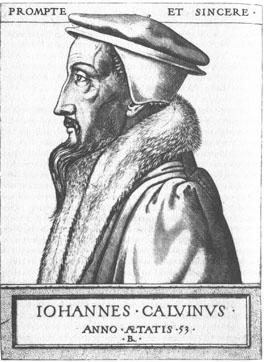
Here's part of what John Calvin says on this: "The metaphor is taken from bargains, in which, when a pledge has been given and accepted, the whole is confirmed, and no room is left for a change of mind. Thus, when we have received the Spirit of God, his promises are confirmed to us, and no dread is felt that they will be revoked. In themselves, indeed, the promises of God are not weak; but, until we are supported by the testimony of the Spirit, we never rest upon them with unshaken confidence. The Spirit, then, is the earnest of our inheritance of eternal life, until the redemption, that is, until the day of complete redemption is arrived. So long as we are in this world, our warfare is sustained by hope, and therefore this earnest is necessary; but when the possession itself shall have been obtained, the necessity and use of the earnest will then cease."

Wednesday, March 01, 2006

faith's fountain


"Remember this; or you may fall into error by fixing your minds so much upon the faith which is the channel of salvation as to forget the grace which is the fountain and source even of faith itself. Faith is the work of God's grace in us. No man comes to Me," says Jesus, "except the Father who sent Me draws him. . .Grace is the first and last moving cause of salvation; and faith, essential as it is, is only an important part of the machinery which grace employs. We are saved "through faith," but salvation is 'by grace.'" - CHARLES SPURGEON

Thursday, February 23, 2006

saved in hope


"As Isaac Watts has written:

Sin, my worst enemy before,
Shall vex my eyes and ears no more;
My inward foes shall all be slain,
Nor Satan break my peace again.

What a heaven this will be! I think that if I could become absolutely free from every tendency to sin, I would not care where I lived – on earth or in heaven, at the bottom of the sea with Jonah or in the low dungeon with Jeremiah. Purity is peace; holiness is happiness. He who is holy as God is holy will be happy as God is happy. This is the chief goal of our hope." - C. H. Spurgeon

free will? absolutely.


Question: Does a person have the ability in and of themself to choose what they want? Answer: Yes.

"...we always choose according to our greatest desire--we always choose the option that we most prefer. This makes every choice determined (it is determined that I will choose the option that I find most preferable), yet free (since we are not being forced to choose, but are choosing what we want to) Our choices are free and truly our choices because we think through the situation for ourselves and come to the conclusion about which choice is best through our own thought processes."
- Matt Perman

The question shouldn't be, "Does a person have the ability in and of themself to choose what they want?", but "What do they WANT?" Before we are given the new birth, we don't desire God. We may desire the benefits of knowing God, i.e. peace, contentment, joy, etc..., but not God Himself (Rom 3:11). Post re-birth, we have our will changed by God, so that afterwards, we want Him freely. He becomes irresistable.

"Man is nothing: he hath a free will to go to hell, but none to go to heaven, till God worketh in him to will and to do his good pleasure"
- George Whitefield

"Free will carried many a soul to hell, but never a soul to heaven"
- C.H. Spurgeon

Tuesday, February 14, 2006

the greatest kind of love


Love is the focus of Valentine's Day. Today's blog is no exception. Here is the last paragraph from the book of the Prophet Micah. This is true love indeed:

"Who is a God like you, pardoning iniquity
and passing over transgression
for the remnant of his inheritance?

He does not retain his anger forever,
because he delights in steadfast love.

He will again have compassion on us;
he will tread our iniquities under foot.

You will cast all our[e] sins
into the depths of the sea.

You will show faithfulness to Jacob
and steadfast love to Abraham,
as you have sworn to our fathers
from the days of old."

- Micah 7:18-20

Monday, February 13, 2006

30,000 foot view of Romans


Here is a great quick summary of Romans by Michael Horton:

The problem that all humanity faces is the wrath of God which is entirely justified because the Gentiles know God according to general revelation, and the Jews know God according to special revelation, yet both have failed to truly acknowledge God since both have violated His Law.

Now, since everyone is under sin and God's wrath, the only way out is the gospel, the announcement that in Christ, God has provided a righteousness that satisfies His holy requirements. Christ has absorbed God's wrath in His death, and justifies the wicked in His resurrection.

All of this is received through faith alone apart from works, as the examples of Abraham and David demonstrate. Yet God has not only secured our salvation from the condemnation of the law, but also the dominion of sin and death.

Baptized into Christ's death and resurrection, we're made new creatures, and yet we continue to struggle with indwelling sin throughout our life. The only hope we have is to look outside of ourselves to Christ with the indwelling Spirit testifying in our hearts to our free adoption, and keeping alive within us the hope that not only we, but the whole creation will share in the final redemption.

In the light of all this, nothing can separate us from God's love. But how then can we trust this gospel if God has been unfaithful to His earlier promises to Israel? Well, God has always maintained His prerogative of election even among the physical descendants of Abraham. So salvation isn't a matter of physical descent or of human decision or effort, but of God's mercy alone.

God has been faithful to His promises, because even now, an elect remnant is being saved from among Jews and Gentiles; and after God brings alien gentile branches to the tree of Israel, He'll finally bring in the fulness of the Jews as well.

In view of all these mercies that stagger our imagination, we can now offer not the dead sacrifices of animals for atonement, but our own bodies as living sacrifices of praise and thanksgiving. In that light, stop judging each other about things indifferent, and get on with the business of loving and serving each other.

Tuesday, February 07, 2006

faith alone


Justification is by grace alone through faith alone because of Christ alone. This is the article by which the church stands or falls...There is no gospel except that of Christ's substitution in our place whereby God imputed to him our sin and imputed to us his righteousness. Because he bore our judgment, we now walk in his grace as those who are forever pardoned, accepted and adopted as God's children. There is no basis for our acceptance before God except in Christ's saving work, not in our patriotism, churchly devotion or moral decency. The gospel declares what God has done for us in Christ. It is not about what we can do to reach him. We reaffirm that justification is by grace alone through faith alone because of Christ alone. In justification Christ's righteousness is imputed to us as the only possible satisfaction of God's perfect justice. We deny that justification rests on any merit to be found in us, or upon the grounds of an infusion of Christ's righteousness in us, or that an institution claiming to be a church that denies or condemns sola fide can be recognized as a legitimate church.
- Cambridge Declaration

Friday, February 03, 2006

geerhardus vos :: theology, part 2


• The grand drama of the unfolding of God's self-revelation in redemptive history raises dilemmas, dilemmas like the fall, the giving of the Sinaitic covenant, and the exile demand to be resolved. It is God who confronts us with those dilemmas. He is holy and we are sinful, and that produces a dilemma for all who have made God their delight. That dilemma is resolved in Christ. In fact history itself continues unresolved until the coming of Christ.

• ...God's purpose for history is personal, including intimate communion with His chosen people, even to become one with them as the Persons of the Godhead are one. God's revelation, then, while necessarily encompassing a cognizant element, goes beyond that. It is a personal revelation whose end is personal communion one with another. And God's revelation not only informs us it transforms us in our inner man and conforms us to the image of that eternal life which is God's purpose.

• Throughout the history of God's revelation, what was present from the beginning progressively comes to light. Nothing new is "added," though different aspects of God's plan become evident which beforehand had been hidden. Revelation progresses in epochal installments or intrusions. The coming to light of that which was shrouded in previous revelation brings new responsibilities to the people of God. One cannot live in the light of full revelation and behave as one for whom that full revelation has not come.

• Since what is present in the consummate revelation of God in His Son, Jesus Christ, is also present, however shrouded, in earlier stages; it lies upon us to uncover where the types and shadows testify the coming reality. For as we have stated before, in light of the culminating revelation of God, the Scriptures, even from the first stages of their growth, are opened up to us in a whole new way. We cannot understand them outside of the context of their fulfillment, a fulfillment which the earlier stages of revelation testify.

• ...from the beginning all redeeming acts of God aim at the creation and introduction of this new organic principle, which is none other than Christ. All Old Testament redemption is but the saving activity of God working toward the realization of this goal, the great supernatural prelude to the Incarnation and the Atonement.

• God chooses men to whom He extends special grace and causes them to stand as figures of the One to come before His people. These heroes are not heroes because of anything inherent in themselves, but because God raises them up and bestows them with special characterizations of the One to come. God projects Christ onto these men and then holds them up before His people so that they might see their Savior, however dimly. But it is essential to understand that these men while types of Christ are types of Adam at the same time. While they testify to the reality to come, they also testify that they are not that reality, in fact, that they need that reality. Nevertheless, God is pleased to call them "friend," and "man after my own heart," and "personal consort" for He sees in them what He has projected onto them, that is His Son.

• The teachings, or word-revelations, accompany the covenantal acts of God, event revelation, and flow from it. Thus it cannot be expected that the teachings of Ezra will have the fullness of scope that the teachings of Peter, though they will be organically unified and complementary. The expressions of devotion from David's heart in the Psalms is uniquely linked to that great self-revelatory act of God in bringing the kingdom of Israel into existence. These expressions inform Paul, but Paul's expressions are more comprehensive, his own expressions being linked to that ultimate self-revelatory act of God in bringing the kingdom of heaven in the person and work of Jesus Christ, that kingdom for which David's kingdom was merely a type. The continuity between David's kingdom and Christ's is that Christ was David's son. The discontinuity is that Christ is David's Lord.

• Vos's theology was driven by the doctrine that pre-fall man had an eschatological hope that transcended life in this creation. The hope set before Adam was a higher estate even from the beginning, for in Vos' words neither God nor man "could be satisfied with an acquaintance based on indirection." In other words, the hope was more God's occasional visitation in which He came and went in the garden. The hope from the beginning was permanent fellowship on a higher plane in which life flowed into life. The course of history, especially sacred history, realizes this hope; and the genius of Vos's biblical theology is his tracing of the covenantal redemptive epochs of history until their climax in Jesus Christ, the last Adam, and His success (first for Himself and then for all who are joined to Him through supernatural regeneration) where the first Adam failed (first for himself and also for all who were in him). Thus all of redemptive history realizes the original purpose of God for His creation, namely eternal (eschatological) Sabbath union with all those whom He chose in Christ from before the foundation of the world as their God and Father.

• The eschatological hope of communion with God on a higher plane which has been promised in the old and fulfilled in the new through the work of Jesus Christ is what Geerhardus Vos preached his entire career. Any form of Christianity that did not aspire to that full and sweet fellowship with God in the heavenlies did not hold interest to Vos because he believed it to be out of step with the biblical witness.

Thursday, February 02, 2006

geerhardus vos :: theology, part 1


Today starts a two-part summary of Vos's biblical theology*:

• The study of God is something encouraged by God, and this is evident by His gift to us of His word. God's eternal purpose to know and be known covenantally by His creatures is revealed in His word, and from this we recognize that the Scripture's revelation of God is the foremost means by which this purpose is realized. It behooves us, then, to see the Bible as God's love letter to His people, a living document in which He discloses Himself. The Bible itself is a condescention on God's part, a grace, a show of favor. Thus, a covenantal approach to Scripture will yield peculiar insights as opposed to a systematic approach. Essentially Biblical Theology adopts God's system, and attempts to conform our understanding of God to God's calculated historical revelation of Himself.

• It is the knowledge of God, the heavenly foretaste of things to come, which enlightens man to himself and to creation around him.

• Essentially all theology is exegetical. There is no true knowledge of God apart from His word. Because the Bible is the source of human knowledge of God, it becomes imperative to make the Bible's own method of revelation our own foundation for formulating theology. Theology is the knowledge of God which God Himself has afforded to His covenant people in His self-disclosure. With this understanding, the study of theology cannot be infringed by the study of religion, which is essentially the study of the creature.

• Biblical Theology is not the study of the Bible, but the study of God as revealed in the Bible.

• God's own method of Self-revelation is supremely and perfectly logical. For it is the logos of infallible God which becomes our standard, not the logos of fallible man. Systematic theology, then, must submit to Biblical theology and formulate its science accordingly. The Bible is arranged not according to axiom but according to history. Good and necessary consequence, the sytematician's trade, must be informed by the theology of God's word, or else it fails in its task and cannot live up to its name. John Murray has pointed out that systematic theology views revelation as a finished whole, while biblical theology views revelation as organic process.

• Because the Bible is a living book, it alone among books accomodates its readers in every class, culture, time, and place. Failure to treat the Bible as "alive and powerful," leads to a perceived gap in culture and history which needs to be bridged by gleaning eternal principles from the text in order to make it relevant. The text itself is relevant by virtue of its nature as Qeo/pnuestoj(Theopnuestos). The Bible actively reaches out to include you. We stand in the same place with the Apostles, namely the semi-eschatological age of fulfillment, looking back at the cross and resurrection and seeing the culmination of God's revelation in Christ. We have been brought into that same wonder-world of redemption which Peter, John, and Paul found themselves in; and that world now compels us in our many stations and positions. It is the air we breathe.

• God has chosen history to be the vehicle of His Selfrevelation, and His Self-revelation is accomplished in the supernatural acts of redemption. This is God's prerogative as sovereign Lord of His creation. God reveals Himself to man as their Redeemer. Redemption for historical beings (man) must take the shape of a historical progress. Redemption cannot be separated from history, and history is the chronicle of God, the Author of history's, accomplishment of that eternal purpose. When history will have achieved that end to which it was brought into existence, it will pass out of existence. Special revelation is historical because redemption is historical if for no other reason than that the redeemed are historical beings.

• A key to Vosian Biblical Theology is the recognition of events as revelatory and prophetic. OT events, like OT prophesy, look for fulfillment, and they find fulfillment in Christ. The redemptive acts of God are patterned after the consummate redemption of Jesus Christ, and as such serve as prophesies of that eschatological act. Like prophesy, those events are sketchy and dim and can only be interpreted in light of the finished work of Christ and the Kingdom of God which His ministry inaugurates. God reveals Himself as the One who declares the end from the beginning, and He does so from the beginning of His revelation. The closer the consummation of history draws, the more evident God's purpose for history becomes, and we recognize in earlier revelation in often less distinguishable types the presence of the end.

* All excerpts from www.two-age.org

Wednesday, February 01, 2006

life's journey


Always think of life as a journey to receive a great inheritance.

"Suppose a man was going to New York to take possession of a large estate, and his carriage should break down a mile before he got to the city, which obliged him to walk the rest of the way. What a fool we should think him if we saw him wringing his hands and blubbering out all the remaining mile, "My carriage is broken! My carriage is broken!"
-John Newton (author of Amazing Grace)

Monday, January 30, 2006

the garden of God

Here's a great quote concerning the theme of the bible:

"The "law" given to the first Adam, the first son of God, was broken, and mankind was thrown out of the garden into the wilderness. The law given to Israel, the son of God, was broken, and the nation was thrown out of its promised land into the wilderness of exile. A last Adam came as the truly obedient covenant partner of God, signifying his identification with a people that desperately needed his help. We can almost hear heaven's sigh of relief, 'At last! A true Son of God.' 'You are my beloved son in whom I am well pleased' is God's word of approval. Then this true Adam, this true Israel, goes out into our wilderness to be tempted and to be victorious, so that he might make for us a way back into the garden of God."
-G. Goldsworthy

Monday, January 23, 2006

a completed sacrifice


And he shall put his hand upon the head of the burnt offering: and it shall be accepted for him to make atonement for him. (Leviticus 1:4)

If by that laying on of his hand the bullock became the offerer's sacrifice, how much more shall Jesus become ours by the laying on of the hand of faith?
My faith doth lay her hand On that dear head of Thine, While like a penitent I stand, And there confess my sin.

If a bullock could be accepted for him to make atonement for him, how much more shall the Lord Jesus be our full and all-sufficient propitiation? Some quarrel with the great truth of substitution; but as for us, it is our hope, our joy, our boast, our all. Jesus is accepted for us to make atonement for us, and we are "accepted in the Beloved." Let the reader take care at once to lay his hand on the Lord's completed sacrifice, that by accepting it he may obtain the benefit of it. If he has done so once, let him do it again. If he has never done so, let him put out his hand without a moment's delay. Jesus is yours now if you will have Him. Lean on Him -- lean hard on Him -- and He is yours beyond all question; you are reconciled to God, your sins are blotted out, and you are the Lord's.

-C.H. Spurgeon

Thursday, January 19, 2006

calvin on good works


1. We have no good works which God rewards but those which we derive from his grace.

2. The good works which we perform by the guidance and direction of the Holy Spirit, are the fruits of that adoption which is an act of free grace.

3. They are not only unworthy of the smallest and most inconsiderable reward, but deserve to be wholly condemned, because they are always stained by many blemishes; and what have pollutions to do with the presence of God?

4. Though a reward had been a thousand times promised to works, yet it is not due but by fulfilling the condition of obeying the law perfectly; and how widely distant are we all from that perfection!

Let Papists now go and attempt to force their way into heaven by the merit of works. We cheerfully concur with Paul and with the whole Bible in acknowledging, that we are unable to do anything but by the free grace of God, and yet that the benefits resulting from our works receive the name of a reward.

Monday, January 16, 2006

keeping watch


“What are the signs of the end and how do amillennial Christians interpret them?”

read Keeping Watch by Kim Riddlebarger

Thursday, January 12, 2006

pray for the peace of jeru... i mean, the church


"Pray for the peace of Jerusalem" was on a bumper sticker I saw a few days ago. Is it wrong to pray this? No. But if you insist it's because God wants us to pray for the nation of Israel because they are His chosen people, well then I'd have a problem with that. Why? Read below:

O. Palmer Robertson on the Israel of God:
The recognition of a distinctive people who are the recipients of God’s redemptive blessings and yet who have a separate existence apart from the church of Jesus Christ creates insuperable theological problems. Jesus Christ has only one body and only one bride, one people that he claims as his own, which is the true Israel of God. This one people is made up of Jews and Gentiles who believe that Jesus is the promised Messiah.

This is taken from an article by Michael Marlowe called The Israel of God

Read more

Wednesday, January 04, 2006

the church's one foundation


The Church's One Foundation
by Samuel J. Stone (1866)

The Church's one foundation is Jesus Christ her Lord,
She is His new creation by water and the Word.
From heaven He came and sought her to be His holy bride;
With His own blood He bought her and for her life He died.

She is from every nation, yet one o'er all the earth;
Her charter of salvation, one Lord, one faith, one birth;
One holy Name she blesses, partakes one holy food,
And to one hope she presses, with every grace endued.

The Church shall never perish! Her dear Lord to defend,
To guide, sustain, and cherish, is with her to the end:
Though there be those who hate her, and false sons in her pale,
Against or foe or traitor she ever shall prevail.

Though with a scornful wonder men see her sore oppressed,
By schisms rent asunder, by heresies distressed:
Yet saints their watch are keeping, their cry goes up, "How long?"
And soon the night of weeping shall be the morn of song!

’Mid toil and tribulation, and tumult of her war,
She waits the consummation of peace forevermore;
Till, with the vision glorious, her longing eyes are blest,
And the great Church victorious shall be the Church at rest.

Yet she on earth hath union with God the Three in One,
And mystic sweet communion with those whose rest is won,
With all her sons and daughters who, by the Master’s hand
Led through the deathly waters, repose in Eden land.

O happy ones and holy! Lord, give us grace that we
Like them, the meek and lowly, on high may dwell with Thee:
There, past the border mountains, where in sweet vales the Bride
With Thee by living fountains forever shall abide!