Tuesday, October 24, 2006

a tulip in the psalms


Psalm 65: 3,4

"When iniquities prevail against me, you atone for our transgressions. Blessed is the one you choose and bring near, to dwell in your courts! We shall be satisfied with the goodness of your house, the holiness of your temple!"

T = "When INIQUITIES PREVAIL against me..."
U = "Blessed is the one YOU CHOOSE"
L = "...the ONE you choose"
I = "...and BRING NEAR"
P = "We SHALL BE SATISFIED with the goodness of your house"

Sure, there are more clear verses in scripture that point us to the wonderful truths of God's salvation, but once you are convinced of these, then your eyes are opened to see the more subtle verses that echo His unbelievable love.

key: T (total depravity) U (unconditional election) L (limited atonement) I (irrisistable grace) P (perseverance of the saints)

Tuesday, October 17, 2006

a quote worth remembering


"Alot of what Job's friends said could be put on a coffee cup and sold in a Christian bookstore." - Michael Horton

Here mp3's of OKC Conference on Reformed Theology "Too Good to be True: Finding Hope in a World of Hype" with Dr. Michael Horton

Friday, October 13, 2006

faith is hard


"Our opponents regard faith as an easy thing, but I know from personal experience how hard it is to believe. That the Holy Ghost is received by faith, is quickly said, but not so quickly done.

All believers experience this difficulty. They would gladly embrace the Word with a full faith, but the flesh deters them. You see, our reason always thinks it is too easy and cheap to have righteousness, the Holy Spirit, and life everlasting by the mere hearing of the Gospel" - Martin Luther

Thursday, October 12, 2006

zealous for good works


"[He] gave himself for us to redeem us from all lawlessness and to purify for himself a people for his own possession who are zealous for good works." - Titus 2:14

"At the heart of Christianity is the truth that we are forgiven and accepted by God, not because we have done good works, but to make us able and zealous to do them. The Bible says, "[God] saved us... not because of our works" (2 Timothy 1:9). Good deeds are not the foundation of our acceptance, but the fruit of it. Christ suffered and died not because we presented to him good works, but he died "to purify for himself a people... zealous for good works".

"Zeal means passion. Christ did not die to make good works merely possible or to produce a half-hearted pursuit. He died to produce in us a PASSION for good deeds. Christian purity is not the mere avoidance of evil, but the pursuit of good."

- John Piper, from Fifty Reasons Why Jesus Came To Die

Tuesday, October 10, 2006

death and the gospel


"...let us never forget that the gospel is for Christians too. We need to hear the word preached to us, whether from the pulpit on a Sunday or in conversation with other believers. If a brother or sister is mourning, then let us not simply tell them that the death of their loved one is all within the will of God; let us not even stop with simply feeling compassion and sympathy for them; let us also point them to the Lord Jesus Christ who rose from the dead.

Death is an outrage, an illegitimate boundary; it is nasty and brutish; but the captain of our salvation has burst through that boundary and come out on the other side. He is risen from the grave; and in his resurrection we see that, though we live in a vale of tears and agony here and now, where death seems to hold all the trump cards, there is a day most certainly coming when we know that we too, and all the loved ones who have gone before us in Christ, will rise to be with Christ. His death was agonizing but it could not hold him; ours will no doubt be terrible and traumatic; but because of Christ, death will not hold us either. " - Carl Truman

Saturday, September 23, 2006

the swiss army verse


"For by a single offering he has perfected for all time those who are being sanctified." - Hebrews 10:14

There are some verses in the bible that are so packed full of meaning and significance, so as to cause one to read and re-read them for a period of time. Bye the way, this is a great definition of "biblical meditation". The above verse is one such example. Read it again carefully.

Consider how many false ideas this verse demolishes. It's like a swiss army knife, it has a tool for everything you could possibly need.

Just a small number of things this verse clears up for the believer:
1. We know Christ's sacrifice was final and complete.
2. He didn't do a half-way job, it was a perfect sacrifice. We can add nothing to it.
3. It covers all sin past, present and future.
4. It points to limited atonement; Christ died for His people.
5. It points us to perseverance; He will complete what He started.
6. It assures us of eternal security being linked to the cross.
7. It affirms, not a sinless life for the believer, but a perfect position before God based on His substitution for us.

any more thoughts?

Wednesday, September 20, 2006

no strings attached?


Everybody needs to have some understanding of predestination since it’s in the Bible.

The dictionary says that “predestinate” means, “to foreordain to an earthly or eternal lot or destiny by divine decree.” Or, in simpler terms predestination means, “God’s decision as to what will happen to a person, especially after they die (heaven or hell).”

There are two basic responses to the idea of predestination:
1. God makes His choice based on his foreknowledge. This means that God (who is omniscient) chooses those He saw from the beginning who would choose God, have faith and follow Christ.

2. From all eternity God decided to save some members of the human race and to let the rest of the human race perish. God made a choice – He chose some individuals to be saved unto everlasting blessedness in heaven, and He chose others to pass over, allowing them to suffer the consequences of their sins, eternal punishment in hell. He chooses based on His good pleasure who will receive grace and who will not. Those that He gives grace, are changed. They desire God and receive the gift of faith and salvation.

- R.C. Sproul

Read More

Friday, September 15, 2006

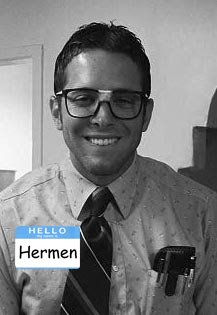
Hermen E. Utics


...No, it's not a nerdly guy, it's how to read the bible!

“By referring to the gospel as the hermeneutical key I mean that proper interpretation of any part of the Bible requires us to relate it to the person and work of Jesus. This was recognized in Article III of the Chicago Statement on Biblical Hermeneutics, which says, ‘We affirm that the Person and work of Jesus Christ are the central focus of the entire Bible.’ We have already considered some of the ramifications of Jesus’ post-resurrection claims that all the Scriptures are about him. This is another way of saying that Jesus is the sole mediator of the truth of God. This mediatorial role has great significance for how we understand the Bible. For there is one God; there is also one mediator between God and humankind, Christ Jesus, himself human who gave himself a ransom for all (1 Timothy 2:5-6). The Jesus who mediates the word of God to us is the Jesus who is defined in terms of his historic saving act. The meaning of the Bible, in that case, is tied to the saving work of Jesus
(Graeme Goldsworthy, Preaching the Whole Bible as Christian Scripture, p. 84).

Monday, September 11, 2006

on weekly communion


"Perhaps the idea of coming to the Table weekly is troubling, but why? The most common argument against weekly celebration of the Supper is that it might become routine. Doubtless this is a danger, but by this rationale all churches should hold only monthly worship services so that the sermons and singing will be truly meaningful. The absurdity of the argument is obvious. The possibility of abuse is no excuse for not making use of the divinely instituted means of grace.

Perhaps there is a more fundamental reason we are reluctant to observe the Supper more regularly. One fears that the simple gospel message of Christ offered for and to sinners is not really on the evangelical agenda—or credenda for that matter. (Agenda is Latin for “things to do,” and credenda is Latin for “things to believe.”) It might be that regular observance of the Supper would require a transformation of most evangelical worship services. It is difficult to imagine how a solemnly joyful service of the Supper would fit into some “seeker sensitive” services.

Weekly Communion would also affect the preaching by tending to orient the service around Christ’s finished work and away from the constant diet of “how to” messages. The juxtaposition of “Ten Steps to a Happy Marriage” followed by a Communion service is too jarring to contemplate. Simply considering a weekly Communion a hypothetical possibility in our time seems to present radical challenges to evangelical piety." - R. Scott Clark

a bittersweet sojourn


The Christian life is one of constant repentance over sin and constant clinging to Christ's bloody, nail-driven hands; sorrow and bliss walk hand in hand with us on our earthly sojourn, until sorrow finally departs on that glorious day when our beautiful Redeemer returns!

faith comes by hearing, not fads


What’s the difference between the latest, greatest religious attraction at the stadium and an ordinary service at your local church, where the Word is properly preached and the sacraments are properly administered? In one, the religious ego is fed; we hear the hype and come to believe – or, at least, to hope – that after having tried so many other spiritual fads, at least this one will do the trick. We’ll raise ourselves from earth to heaven, from blahs to bliss, from strain to living at the center of God’s blessing.

read more

Wednesday, September 06, 2006

humility


"When a certain rhetorician was asked what was the chief rule in eloquence, he replied, 'Delivery'; what was the second rule, 'Delivery'; what was the third rule, 'Delivery'; so if you ask me concerning the precepts of the Christian religion, first, second and third, and always I would answer, 'Humility'. - Augustine

Friday, September 01, 2006

are you a deiphobe?


"Even the Christian must fear God. But it is another kind of fear. It is a fear rather of what might have been than of what is; it is a fear of what would come were we not in Christ. Without such fear there can be no true love; for love of the Saviour is proportioned to one’s horror of that from which man has been saved. And how strong are the lives that are suffused with such a love! They are lives brave, not because the realities of life have been ignored, but because they have first been faced — lives that are founded upon the solid foundation of God’s grace. May such lives be ours!" - J. Gresham Machen

Thursday, August 31, 2006

calvinism


Well can I remember the manner in which I learned the doctrines of grace in a single instant. ... I can recall the very day and hour when first I received those truths in my own soul when they were, as John Bunyan says, burnt into my heart as with a hot iron, and I can recollect how I felt that I had grown on a sudden from a babe into a man that had made progress in Scriptural knowledge, through having found, once for all, the clue to the truth of God. - C.H. SPURGEON

faith is a gift


"Faith is a gift from God, so that no one may boast ... The last bastion of pride is the belief that we are the originators of our faith ... This teaching about faith being a gift of God raises many questions. God has answers for all of them, even if we don't. Let us seek to put the teaching into practical biblical use, namely the humbling of our pride and the stimulation of our prayers. In other words, let us pray daily: "O Lord, thank you for my faith. Sustain it, Strengthen it. Deepen it. Don't let it fail. " - John Piper

Friday, August 25, 2006

Jesus, the temple


"Jesus answered them, 'Destroy this temple, and in three days I will raise it up.' The Jews then said, 'It has taken forty-six years to build this temple, and will you raise it up in three days?' But he was speaking about the temple of his body."
-John 2:19-21 (ESV)

" 'Kill me, and I will become the global meeting place with God.' That's the way I would paraphrase John 2:19-21. They thought Jesus was referring to the temple in Jerusalem: 'Destroy this temple, and in three days I will raise it up.' But He was referring to His body. Why did Jesus draw the connection between the Jewish temple and his own body? Because he came to take the place of the temple as the meeting place with God...' 'Where we meet him, we meet God.' "

- John Piper, Fifty Reasons Why Jesus Came to Die

Wednesday, August 23, 2006

how do law and faith relate?


"...faith alone makes someone just and fulfills the law; faith it is that brings the Holy Spirit through the merits of Christ. The Spirit, in turn, renders the heart glad and free, as the law demands. Then good works proceed from faith itself. That is what Paul means in chapter 3 when, after he has thrown out the works of the law, he sounds as though the wants to abolish the law by faith. No, he says, we uphold the law through faith, i.e. we fulfill it through faith." - Martin Luther, Intro to Romans

Tuesday, August 22, 2006

keep your eyes on Jesus


It's so important to keep our eyes on Jesus, the author and perfector of our faith. But what does that mean? Here are but a few thoughts:
-We must focus our eyes on Jesus' intrinsic righteousness (He is Holy and completely pleasing to the Father)
-His perfect life (lived for us)
-His sufferings (taken for us)
-His Kingship (ruling over us)
-His humanity (representing us)
-His deity (guiding us)
-His compassion (caring for us)
-His righteous anger (eradicating sin for us)
-His shepherd heart (feeding us)

Any others?

Friday, August 18, 2006

was there a "church" in the old testament?


Dispensational and New Covenant theology say NO. Covenant theology says YES.

Herman Ridderbos speaking on Matthew 16:13-20: "We should note that this is the first and, besides 18:17, the only time that Jesus spoke of His church in the Gospels. He apparently was alluding to the time when the disciples would carry on His work in His name. He referred to the future fellowship of believers with a word that corresponds to the name that had been given to ancient Israel as a religious community (Hebrew: qahal). Commentators have argued for a variety of reasons that Jesus could not have spoken of such a future organization at this stage of His life. Thus they think that the statement was not Jesus’ own but was put back into His mouth later by the church. Such a glance into the future is not at all surprising at this point, however, since the gospel here is taking a distinct turn toward the end of Jesus’ life. What is more, Jesus did not speak of an organized church. He was merely alluding to the future community of those who would believe in Him. In view of what He said elsewhere about "fishers of men" (4:19), about His "sheep" (John 10:15; 21:15) and his "flock" (John 10:16), and in view of the close circle of disciples that He had gathered around Himself, His notion of such a community cannot be considered anachronistic.

By calling this community His church, He designates it as the people of the Messiah, the community that would replace Israel as the people of God. Jesus had more to say about this future church: `the gates of Hades will not overcome it’ . . . . The church of Christ . . . will not be overcome by this power of death. Jesus spoke here as one who was stronger than death and who would cause His church to share in His victory over it." [See Herman Ridderbos, Matthew: Bible Student’s Commentary, trans Ray Togtman (Grand Rapids, Zondervan, 1987), 304].

While the church is clearly a new covenant institution [Cf. Meredith Kline, The Structure of Biblical Authority (Grand Rapids: Eerdmans, 1981), 193], Jesus’ use of the word qahal clearly indicates a continuity with the Old Testament people of God. The connection then is eschatological and covenantal [see Donald A. Hagner, Matthew 14-28: Word Biblical Commentary, Vol. 33b (Dallas, Word Books, 1995), 471].

Now, would I be emphatic about this point? Not too much, but it is important to realize - whichever side of the fence you're on - that God's elect throughout history have always been save by grace, through faith in the historical Messiah.

See a comparison of these 3 systems: Disp, NCT and CT

indwelling sin


It is a doctrine, as I believe, taught us in Holy Writ, that when a man is saved by divine grace, he is not wholly cleansed from the corruption of his heart. When we believe in Jesus Christ all our sins are pardoned; yet the power of sin, albeit that it is weakened and kept under by the dominion of the new-born nature which God doth infuse into our souls, doth not cease, but still tarrieth in us, and will do so to our dying day.

It is a doctrine held by all the orthodox, that there dwelleth still in the regenerate, the lusts of the flesh, and that there doth still remain in the hearts of those who are converted by God's mercy, the evil of carnal nature. I have found it very difficult to distinguish, in experimental matters, concerning sin. It is usual with many writers, especially with hymn writers, to confound the two natures of a Christian. Now, I hold that there is in every Christian two natures, as distinct as were the two natures of the God-Man Christ Jesus. There is one nature which cannot sin, because it is born of God—a spiritual nature, coming directly from heaven, as pure and as perfect as God himself, who is the author of it; and there is also in man that ancient nature which, by the fall of Adam, hath become altogether vile, corrupt, sinful, and devilish.

There remains in the heart of the Christian a nature which cannot do that which is right, any more than it could before regeneration, and which is as evil as it was before the new birth—as sinful, as altogether hostile to God's laws, as ever it was—a nature which, as I said before, is curbed and kept under by the new nature in a great measure, but which is not removed and never will be until this tabernacle of our flesh is broken down, and we soar into that land into which there shall never enter anything that defileth. - C.H. Spurgeon from his sermon, Indwelling Sin, June1, 1856